
-
Follow me on:
-
Category Archives: Books
Me Before You
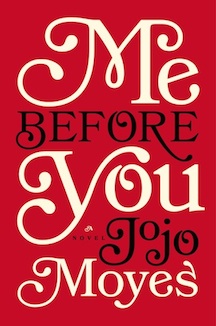
Wow this is a dynamite novel. So well done, so heartfelt, the characters so believable I thought they were real. It was sad to leave them behind at the end. So far I think “Me Before You” is my favorite read of 2013; does that make me a lightweight? I hope not. After all, British author Jojo Moyes is definitely more than a romance writer by now if ever she was categorized as only that.
This was my first Moyes read so I’m definitely behind the curve as I know she’s popular for quite a few other novels. I had heard such great things about her and this book that I had to snap it up. It was a pick for my book club, too, and I was glad it didn’t disappoint.
Most know by now, “Me Before You” is about a 35-year-old former male business executive in England who suffers an accident and becomes confined to a wheelchair as a quadriplegic. Twenty-seven year-old Louisa Clark becomes his caretaker though she has no experience working with disabled people. She’s not wealthy like he is, and they are at odds at the beginning, he is very embittered and she’s quite new to the situation. But after months they finally start to warm to each other and begin to broaden each other’s horizons. About then Louisa secretly finds out Will’s set a six-month deadline to go through with an assisted suicide. So she begins to plan adventures to take him on that hopefully will change his mind. Both meanwhile find themselves falling for the other. Will he go through with the suicide or won’t he? That is the question.
The issues behind the book seem quite topical and well researched by Moyes. You really feel a perspective of what disabled people go through and what they face on a daily basis. Despite the grim subject matter, the novel is quite uplifting and didn’t seem overly sentimental; the character of Louisa is upbeat and endearing, funny at times, and the families of Will and Louisa play interesting supporting roles. Moreover, the love story of these two from different worlds sweeps one away. I felt for both of them, and thought the ending worked okay though others might disagree.
If you read this one, let me know what you think. And if you didnt, check it out! Continue reading
Posted in Books
8 Comments
The Curiosity
I’m usually game for science/suspense novels especially having to do with Arctic exploration, paleontology/anthropology or those of another era, including people or creatures stuck in the ice (or even sap for those “Jurassic Park” readers). Yeah let me at those books!
Stephen Kiernan’s debut “The Curiosity,” published last month, came right at a good time for such a summer read. It’s not giving anything away to say it’s about a man swept overboard into the Arctic Ocean in 1906, who’s found frozen deep in the ice by a group of modern-day scientists and is brought back to life to today’s world.
The ramifications of this are huge and the novel interestingly delves into all sorts of issues: how the frozen man views today’s technological advances in contrast to the world he left behind; what his reanimation means for the field of cryonics; and the moral, ethical and religious questions it raises about humanity and bringing back a dead person to life.
The story unfolds through four rotating narrators; there’s the frozen man himself (Jeremiah) who comes back to life and slowly regains his memory of his former life as a judge, husband and father; and Dr. Kate Philo, who’s scientific team made the discovery and comes to know and love her subject albeit a bit too personally; and her boss the egotistical Erastus Carthage who’s after power, glory and money from the discovery; and lastly, Daniel Dixon the slimy journalist who ends up playing a heavy hand in the novel’s crash-down ending.
All in all, I enjoyed the novel, and thought it a good summer yarn, one that raises some interesting dilemmas, and in places was a good page-turner. The author has a good ear for writing dialog and conjuring the transformative story. Just a few problems popped up for me: the middle of the novel seemed to lose steam and lag a bit and I thought it could’ve been edited shorter than its 432 pages. It seems to get a bit redundant in the middle, and two of the narrators (Carthage and Dixon) I looked forward to much less than the two main narrators, Jeremiah and Dr. Philo. Perhaps in this respect their characters were a bit too black-and-white, between being bad guys than good guys.
I also had a few credibility issues here and there with the narrative (beyond the premise), but I guess I could possibly believe the love story theme towards the end between scientist and subject.
After all, remember Timothy Hutton in “Iceman” in 1984? It was similar in concept. Hutton plays an anthropologist whose team finds a body of a prehistoric man in ice who comes to life. And Hutton finds himself defending the man against those who want to dissect his life in the name of science. There’s a love there for another persecuted human being, am I right? And always in these tales, the scientist will go down fighting. Meanwhile the modern-day world, which ruins everything, is viewed as awful.
Interestingly author Stephen Kiernan says the idea for “The Curiosity” came from the James Taylor song “Frozen Man,” which he heard in 1992. I guess I’m not too familiar with that song, but I have to give Kiernan credit for letting his novel thaw over these many years. “The Curiosity” got me interested in the ice again, earlier eras and the primordial goo that makes up life and ties all that lives together. Way to go, an enticing debut!
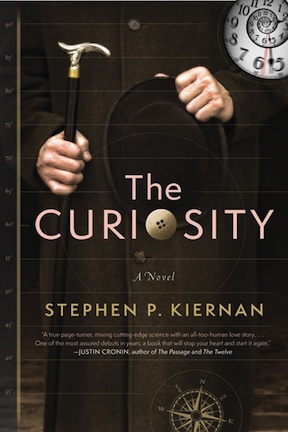
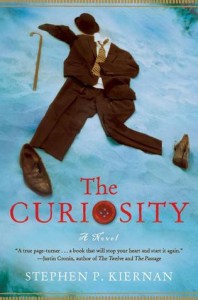
PS. I like the book cover of the Canadian edition (pictured above) much better than the U.S. edition (at left), which seems with the clothes spread out almost clown-like and perhaps confusing. The Canadian edition is more fetching and dignified of the frozen man. What do you think? And are you curious to read “The Curiosity”? Continue reading
Posted in Books
5 Comments
The Coldest Night
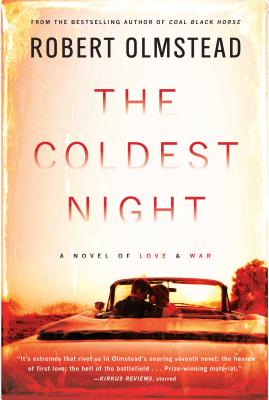
Quite an alluring book jacket cover eh? I had not read author Robert Olmstead before but I was intrigued that “The Coldest Night” was a love story set in the 1950s at the backdrop of the Korean War. What could be more tragic than intense young love and war? And on the 60th anniversary of the armistice that ended the Korean conflict, I was curious to know more and pay tribute to the Vets who fought to keep the peninsula free. “The Coldest Night” looked like a good read, so I was game.
The story is broken into three parts. The first part introduces a boy named Henry Childs, 17, who has been raised by his single mother in the hills of West Virginia on not a lot of money. He starts working at a ranch caring for horses in his spare time when he falls for a judge’s daughter named Mercy who takes riding lessons there. They end up falling passionately in love and decide to run away to New Orleans in a state of young bliss, that is until Mercy’s father and brother track her down and force them to part ways, letting Henry know he’s not on par with their kind of people.
Devastated to lose Mercy, Henry joins the Marines (in the second part of the novel) and is sent to Korea in time to fight in the brutal battle of the Chosin Reservoir. Here he experiences war atrocities and suffering that are unimaginable. His dreams of Mercy and their times together seem to pull him through in the darkest of these times.
In the final part, Henry slowly makes his way back home, though he’s changed and literally scarred by the war. He can’t seem to forget the horrendous things he’s seen and experienced in Korea, and is also shattered by his mother’s passing while there. Will he reconnect with Mercy, you wonder, or will both be too changed to be together now? What has happened to her in the meanwhile? These are questions mostly resolved in the novel’s final pages.
It may seem a straightforward love/war story with a familiar premise yet the writing in “The Coldest Night” is quite beautiful, notably the descriptions and the coming of age of the boy Henry, who’s quite sensitive to the world and his first love. I especially thought the author, Robert Olmstead, wrote the war scenes amazingly well, and the falling in love parts aren’t too shabby either. His descriptions of the Korean battles really blew me away, and were more effective to me than another war novel I read recently called “The Yellow Birds,” which I know is about a different war but on the whole didn’t grasp me like this one did. Olmstead has a beautiful command of words, which makes “The Coldest Night” a stark but moving book that’ll simmer through you long after the pages float by.
What about you, have you read this novel? What did you think? And what are the best war stories you’ve ever come across? Continue reading
Where’d You Go, Bernadette
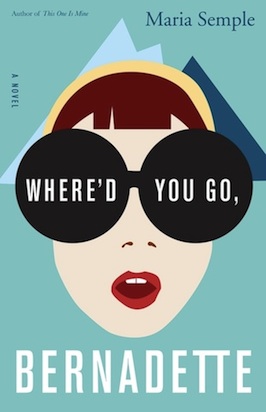
I heard so many good things about Maria Semple’s 2012 novel “Where’d You Go, Bernadette” from the blogosphere that I snatched it up for summer reading especially because I heard it was “divinely funny” and “masterfully satirical.”
Many know by now it involves a quirky, smart family living in Seattle. The mother (Bernadette), formerly a recipient of a MacArthur genius grant for architecture, has turned agoraphobic and bipolar; the father, a star at Microsoft, is crazy-busy developing a program with robots; and their whip-smart 15-year-old daughter Bee, who’s suffered various heart operations as a child, has gotten in early acceptance to an elite prep school back East. For this, her parents grant her any wish she wants, which turns out to be a family trip to Antarctica during Christmas break. But the stresses this puts on them starts to unravel their world and ultimately leads to Bernadette’s disappearance.
Written in the form of correspondences: emails, letters, documents, the novel comes off quite fresh and innovative. The first half I found pretty amusing especially the mother’s emails to a “virtual assistant” in India who does many of her chores because Bernadette doesn’t want to go out of her house or see people, whom she seems to dislike. Bernadette’s definitely a bit nutty and cynical (especially to other school kids’ parents whom she refers to as gnats), but she’s still a bit humorous in her ways and not unsympathetic. Her love for her daughter comes shining through.
With its pieced together correspondences, I wasn’t exactly sure where the story was heading, but Bernadette’s unstable actions begin to take the family to the brink in the book’s second half. It gets a bit more serious, for sure, as her husband attempts an intervention for her, only to find Bernadette’s flown the coop. It’s around then the novel picks up and you’re not sure if the family will break apart or if she’ll be found and they’ll get back together. But along the way you get a good perspective of each of the characters and what they’re going through. I especially liked the brainy teenage Bee.
Perhaps my favorite part of the novel, which I found engaging especially toward the end, is the whole Antarctica trip and the voyage the father and Bee take there trying to find Bernadette. It seems the perfect backdrop for the family’s woes and a lot of interesting detail is given to their travels to the continent, which on average is the coldest, driest, and windiest continent on Earth. For this particular family, Antarctica seems just the right place to begin the healing, or should I say, the thawing. …
What about you, did you like Semple’s novel? Or did you think it went overboard? Continue reading
Posted in Books
12 Comments
The Great Gatsby
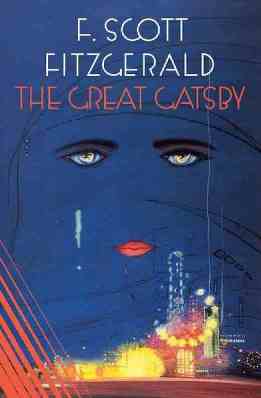
Yes, I am one of those people who just reread F. Scott Fitzgerald’s 1925 classic “The Great Gatsby” so that I could see and compare it with the new Baz Luhrmann movie of it. I dusted off my memory from high school and absorbed the slim volume carefully. Ahh yes the prose, and the green light, and those lavish parties thrown by Jay Gatsby at his mansion on Long Island, N.Y., during the Jazz Age of the 1920s. How could I forget the love triangle between Gatsby and the beautiful Daisy Buchanan, who is swept up in marriage to Tom, after Gatsby, her pre-war beau, doesn’t return right away at the end of the war. Gatsby’s plan is to make his fortune first before returning to reclaim the wealthy Daisy. But by then, she’s married, which throws a wrench into his overall plans to marry her and live in his mansion happily ever after.
But Daisy’s husband Tom is not exactly faithful to her, which leaves the door open, along with Gatsby’s undying love, whether Daisy will leave Tom for Gatsby. She still apparently loves Gatsby dearly, too, but nothing’s ever easy, especially for such star-crossed lovers. Daisy’s from old money, but Gatby’s grown up poor and made his fortune more recently in dubious, under-the-table ways. When Tom angrily confronts Gatsby about this in front of Daisy, all begins to crumble.
Even from my high school days, the book holds up — the tragic love story, the narration by Nick Carraway (Gatsby’s next-door neighbor), and what it says about the human experience and the American dream. I’m still a fan of Fitzgerald’s. I’ve read his first novel “This Side of Paradise” as well and would like to read “Tender Is the Night” someday. Of course, there’s quite a few memorable passages in “The Great Gatsby,” such as this one I like:
They were careless people, Tom and Daisy—they smashed up things and creatures and then retreated back into their money or their vast carelessness, or whatever it was that kept them together, and let other people clean up the mess they had made. …
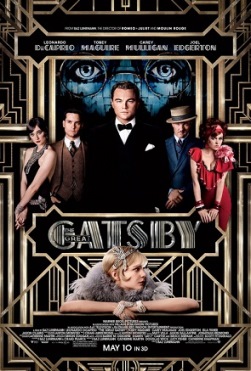
Anyways, the day I finished the novel, I hurried out to see the new “Great Gatsby” movie, dragging the husb along the way. But I was quite nervous because I’d read quite a few bad reviews of it in the papers. Many had critiqued it for being loud and noisy and chaotic like an amusement park. So I had rather low expectations of this 3D extravaganza (after all who did this director think he was doing this to “The Great Gatsby” — blasphemy!), but then as I watched it I was pleasantly surprised to find myself quite enjoying it. Whew. The book wasn’t trashed after all. In fact, the movie is considerably faithful to the novel. The lines are there, and the actors do a good job with it, especially Leo DiCaprio as the love-obsessed Gatsby, hooray! Who would have thought it. Even Tobey Maguire as Nick didn’t annoy me. And Carey Mulligan as Daisy held her own despite such a tough assignment.
There’s a few scenes I would have changed to make it more authentic (such as no floating in the air etc.), but I still enjoyed the ride and was able to feel the drama. I didn’t mind the contemporary feel with the mix it had using today’s music. My husb’s response to the film was more lukewarm than mine. But I think the new “Gatsby” movie is quite an improvement from the 1974 “Great Gatsby” film with Robert Redford and Mia Farrow, which I watched recently and found quite laborious and the acting stilted. I usually like Redford in everything but even found him to be pretty bad.
How about you, what did you think of the new film? Or do you plan to see it? Continue reading
Posted in Books
16 Comments
Harold Fry and Mud
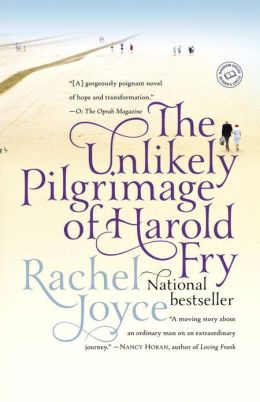
I’ve been busy with life away from the computer lately but did enjoy the novel and film below.
“The Unlikely Pilgrimage of Harold Fry” is a novel that I read for my book club this month and one that I wanted to read because it was so popular after its release in 2012. It made the long list for the Man Booker Prize, too. Not bad for a debut novel!
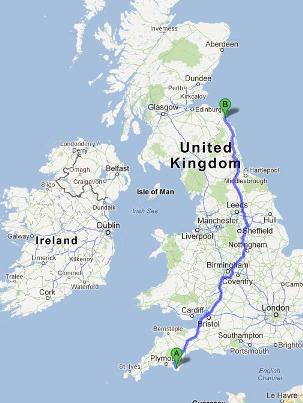
Many know by now it’s about a retired man (Harold) in his 60s who, upon receiving a letter from a former work friend (Queenie) informing him of her terminal cancer, impulsively leaves his wife (Maureen) at home and undertakes a walking journey across England to visit her. He tells Queenie to wait for him and somehow thinks his walking will save her.
Along the way Harold meets various characters who help him on his difficult, ill-prepared 600-mile journey (in yachting shoes no less!), in which he reminisces about his life, pondering over his many regrets, namely that he wasn’t a better father to his only son. We also find out his marriage is just about completely broken and he’s been a total couch potato for a long, long time. But during the arduous journey he comes to be transformed as does his wife, who’s waiting for him at home. Towards the end, a dark part of the family’s past is revealed, which both come to grips with in a new and more understanding way.
The book seems to have a simple premise about an ordinary character I wouldn’t normally care much about, and yet the novel pulled me in from early on. I didn’t think I’d like it, but I was pleasantly surprised. It had a lot of weighty themes, such as loneliness, despair, regret, fear, as well as hope and transformation. I enjoyed spending time with Harold on the road and those he meets along the way, and I thought the novel was beautifully written, both heartfelt and visually capturing.
One of my book club members said its pilgrimage reminded her a bit of “The Canterbury Tales,” which I thought was rather astute. It slightly reminded me of “Forrest Gump,” when Forrest runs across the country, thinking upon his life. The author Rachel Joyce said she wrote the story when her father was dying of cancer and that it was her escape. “My way,” she says, “of making sense. And somehow also my way of finding the flip side to my complicated, wild grief.”
“The Unlikely Pilgrimage of Harold Fry” is a touching gem and one that I’m glad not to have skipped over.
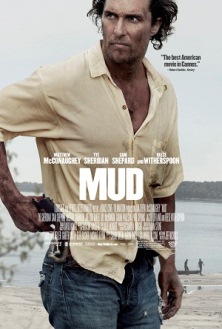
The movie “Mud,” too, is quite enjoyable. It’s a coming-of-age story about two 14-year-old boys (Ellis and Neckbone) who befriend a fugitive named Mud (played by Matthew McConaughey) that they come across hiding out on a small island, where an old motor boat sits lodged in a tree.
It’s set in a poor Arkansas town near the Mississippi River, where Ellis lives on a houseboat and helps his father sell catfish door to door. Secretly, the boys try to help Mud evade some bad-guy bounty hunters after him and reunite with his old trampy girlfriend, played, I thought, by a miscast Reese Witherspoon.
Ellis, in particular, steals the movie as the idealistic kid who believes in the fugitive Mud and life and high school love along the Mississippi, only to be crushed when things turn out not so rosy. The cinematography of the river and community along its shores also makes the story come alive, and it’s got a strong supporting cast that includes the iconic Sam Shepard and Michael Shannon of 2011’s “Take Shelter.” With some decent suspense and nice script twists, the movie is pretty entertaining. The only trouble is you have to suspend your disbelief quite a lot. How can they not find this fugitive when he’s right there in the open? The ending, too, gets pretty crazy and unbelievable, but still the boy’s story along the Mississippi for the most part is well worth the price of admission.
The screenwriter and director Jeff Nichols was apparently said to be inspired for the film “Mud” by Mark Twain’s works. And in seeing it, you can imagine that Ellis and Neckbone are sort of like a modern-day Tom Sawyer and Huck Finn. I was slightly reminded, too, of the 1986 film “Stand by Me,” which has a similar coming of age, outback feel to it. It seems like Tye Sheridan who plays Ellis could well have a future in movies after his indelible performance in “Mud.” Continue reading
Posted in Books, Movies
13 Comments
The Burgess Boys
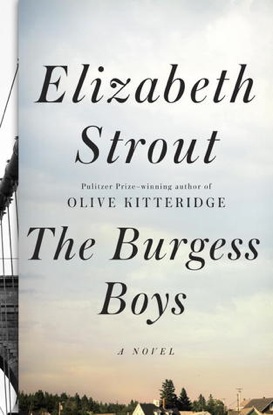
Elizabeth Strout’s latest novel “The Burgess Boys” follows up her 2009 Pulitzer Prize-winner “Olive Kitteridge,” which I liked quite a bit along with her novel “Amy and Isabelle” from 1998. So I jumped to read this one about two middle-age brothers, Bob and Jim, both lawyers in NYC, and their sister, Susan, who still lives in their hometown of Shirley Falls, Maine. “The Burgess” family reunites in Maine after Susan’s teenage son, Zach, pulls a senseless prank at a mosque that eventually leads to a hate-crime charge. Jim, who’s a hotshot corporate attorney,works to get the charge on his nephew dropped, while Bob, the hapless brother who’s always idolized Jim, goes to lend support to their sister Susan, who desperately needs their help.
“The Burgess Boys” is a bit of a departure for Strout, whose past books have mainly been about women and children, not brothers. This one seems a bit more accessible than quirky “Olive Kitteridge,” and is propelled by the topical issue of immigration and the prejudices surrounding the era after 9/11. But like her other books, “The Burgess Boys” focuses mainly on family relationships, which Strout writes so adeptly about, and involves New York and Maine, which might make you think Olive Kitteridge is going to pop out of the story briefly, but alas she doesn’t.
Strout writes masterfully about the Burgess siblings and I got drawn in to the Jim-Bob-Susan dynamic of the story along with their spouses and exes. There’s a hierarchy, disfunctionality and grievances towards one another that feels very real, all shaped by the guilt of their father’s accidental death when they were young. Towards the end of the book, a secret about this is revealed that blows the story into another gear.
“The Burgess Boys” is a book that’s both subtle yet charged. I’m sure I especially won’t forget about Bob or Jim for a while. They conjure a complexity about brothers that seems to hit a nail on the head. With “The Burgess Boys,” I felt for a time like I had stepped into a siblings’ world and how they had grown up in Maine with the weight of their childhood on their shoulders. Perhaps because of this they seem to hang on to each other despite their troubled relations, and the book is more touching than a downer.
It might be a departure from “Olive,” but “The Burgess Boys” is a solid follow-up. Continue reading
Posted in Books
12 Comments
Seaworthy: A Swordfish Captain Returns to the Sea
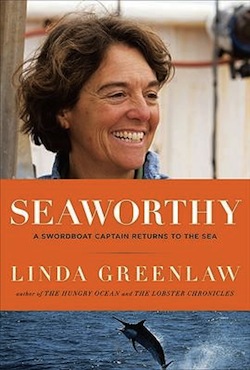
Every once in a while I’ll read a book of nonfiction. I enjoy fiction more, but when done well, nonfiction can be good, too. My husband gave me “Seaworthy: A Swordfish Captain Returns to the Sea” for Christmas I think because he wants to keep me interested in being on a boat at sea. We stayed aboard a sailboat for a week last summer, sailing around Lake Ontario, which was pretty much tantamount to heaven for him, though I’m not sure I ever really got to be captain of the boat like Linda Greenlaw.
You may remember Linda Greenlaw from Sebastian Junger’s 1997 book “The Perfect Storm” about the swordfishing crew aboard the Andrea Gail who were lost at sea during a huge storm in 1991. Greenlaw was also featured in the 2000 movie version played by Mary Elizabeth Mastrantonio; Greenlaw was captaining the sister ship the Hannah Boden at the time and was friends with the captain of the Andrea Gail and in radio contact before it went down. She told about that experience in her 1999 book “The Hungry Ocean.” She’s noted as being America’s only female swordfish boat captain and has written three books about being a commercial fisher.
But this was my first of hers. I had read Junger’s “Perfect Storm” and somehow never got around to reading Greenlaw’s “Hungry Ocean” (though I still want to). “Seaworthy” picks up her story 10 years later after she’s been asked to captain a boat for a season of swordfishing once again. She’s been out of swordfishing since then, while lobstering, and now at 47 years old was worried she’d be rusty, but couldn’t help but jump at the chance.
“Seaworthy” tells of her time captaining the sixty-three-foot boat the Seahawk on a quest for swordfish with a crew of four guys along the Grand Banks off Newfoundland. It’s quite a tale. Who knew Greenlaw would incur such terrible happenstances upon her return to commercial deepwater fishing? It seems almost as if everything that could go wrong, sort of does. The equipment doesn’t work, the shoddy boat breaks down, they drift into Canadian waters while fishing and Greenlaw is arrested, they lack gear and electronics, and the boat’s overseer makes a wrongful decision in ordering them back to port too early to drop the fish off at market.
I realize now there’s so many aspects that come into play in swordfishing at the Grand Banks. Greenlaw writes it’s 1,000 miles from home and 144 hours from Cape Cod Bay, just in getting there. Good luck if you break down. They planned for 60 days at sea, out on the ocean setting and hauling in 30 miles of long lines of 800 hooks again and again, all amid hurricane season. It’s sort of madness that can get one killed in unpredictable weather and on an unreliable boat, but Greenlaw appears at home in her element, being at sea on a fishing boat captaining men.
She’s an entertaining narrator, and combined with the daily journey, gets into the mental aspects of what makes a good captain, how she gets along with the crew, and how she’s changed in her years away from swordfishing. She goes into her inner doubts and explores herself at this stage in life while facing a myriad of challenges onboard the Seahawk.
It all makes for interesting reading. I got caught up in “Seaworthy” and felt despite the Seahawk’s various disasters it was a worthwhile and compelling read. I’m envious Greenlaw is both such a knowledgeable boat captain and an author who can write so well about her adventures and the profession she loves. I felt like I could feel the boat rocking and the wind at sea. I’d be interested to read her other books as well.
Which by the way, she has just published a new book called “Lifesaving Lessons: Notes From an Accidental Mother” about her newly adopted daughter. From what blogger Beth Fish says of the audiobook, it’s quite inspirational as well. Check it out. Continue reading
Posted in Books
6 Comments
Gone Girl
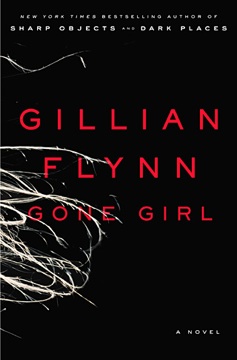
Yep, I finally took the plunge and read last year’s top-selling suspense novel “Gone Girl.” About time, right? I sort of had been saving it for an island retreat or something, where I pictured devouring it while lounging on a beach chair under a palm tree. But “Gone Girl” never made it to spring break, which for me is in April, it got picked up by my book club and we discussed it this week.
For sure, most people know what it’s about by now. It’s about a marriage gone terribly wrong and a fifth year wedding anniversary that comes and goes with the wife found missing under suspicious circumstances. What more do you need to know? The couple (Nick and Amy) had been magazine writers in New York City before losing their jobs and having to move back to Nick’s hometown in Missouri. Using Amy’s money (her parents are successful authors of an “Amazing Amy” book series), Nick has bought a bar with his twin sister where he works while Amy remains at home unemployed. That’s about when the wheels come unglued for these two.
It’s told in alternating chapters between Nick, who’s a suspect in his wife’s disappearance, and Amy who fills in the history of their relationship from the beginning. The author weaves the web of it all very well, suspensefully propelling one through it almost like a bat out of hell. I can’t say the characters are really likable, there’s no real good guys in this. I’m sure you’d be ready to hypothetically strangle either Amy, Nick or the cops, sister, or parents at times for what they’re like. And don’t forget Desi.
I mean the novel is done well, but it’s pretty crazy. It reminded me slightly of a combination of “Fatal Attraction,” “Presumed Innocent” and perhaps a touch of “Psycho” thrown in. There’s plenty of twists, with the characters trying to outmaneuver each other at each step of the way. Suffice it to say you’ll be fairly spent by the time you get done. I think my book club liked it quite a bit but I’m not sure I’d recommend it to everyone. But for the suspense genre, it sure has made waves.
“Gone Girl” recently made the longlist for the 2013 Women’s Prize for Fiction, formerly known as the Orange Prize. Stay tuned to see if it will make the shortlist, which will be announced on April 16. It also apparently has been picked up to be made into a movie, which begs the question: who should be in it? My book club suggested possibly: Josh Lucas as Nick and Charlize Theron as Amy. hmm. Your suggestions?
ps. This summer my husband and I will have our third year wedding anniversary; if “Gone Girl” is any example just think what we have to look forward to at the fifth year anniversary!@!?<@#! LOL. Continue reading
Posted in Books
12 Comments
When God Was a Rabbit
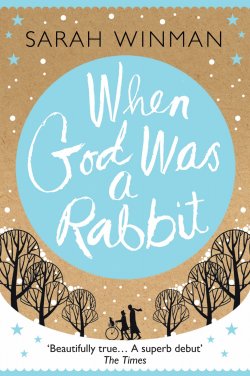
I read “When God Was a Rabbit” for my book club. I hadn’t heard of it before perhaps because it’s a 2011 debut novel from a British author. I definitely would’ve remembered a title like that, which is different enough and made me not sure what to expect. But if you’re wondering, it’s not really a religious or supernatural novel per se.
It’s sort of a novel that’s hard to pinpoint, but it’s primarily about a brother (Joe) and his close, younger sister (Elly) who grow up in Cornwall, England with their parents. Elly tells their story, which spans from her birth in 1968 to 9/11, and from England to New York, where Joe moves as an adult. The narrative includes a colorful cast of Elly’s down-home parents, an aunt that’s gay, her quirky life-long friend Jenny Penny, her brother’s first love Charlie, family friends Arthur and Ginger, and of course a pet rabbit from childhood that her family refers to as God.
Along the way, each of the cast, who are all a bit quirky, seems to suffer a tragedy or hardship that marks their life, yet they persevere with the help of their strong bonds to each other. Elly and her brother are particularly close; she believes he’s the only one who truly understands her. But when a terrible event happens toward the end, their life-long bond is threatened.
In many ways, the novel is very readable and engaging, particularly in the first half when Elly is young and impressionable and telling of her life growing up. She is funny in places despite the bad things that happen, and the cast is interesting.
But later on, the second half of the novel gets a bit disjointed and meandering as if the author didn’t know where she was going with it. Some of the transitions get abrupt, making it hard to discern if the characters are in England or New York. Other details like Elly’s home-schooling are mentioned then dropped; years fly by. More bad things happen, and the narrative turns a bit maudlin. Elly seems to be yearning for her childhood days “when God was a rabbit” and her innocence wasn’t lost.
The novel has endearing qualities, but it just didn’t execute all the way through for me. My book club seemed to have a similar impression of it. What about you? Have you read this one? What did you think? Continue reading
Posted in Books
6 Comments