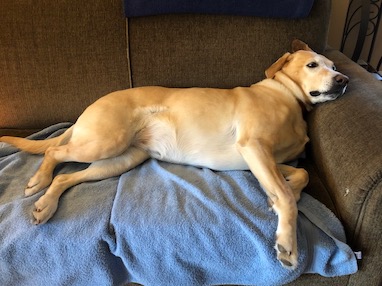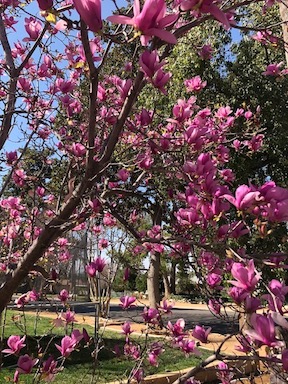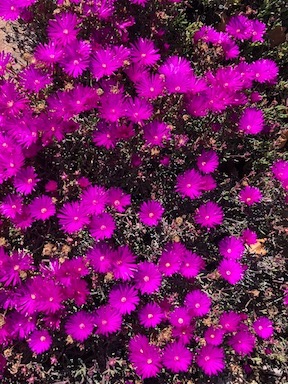
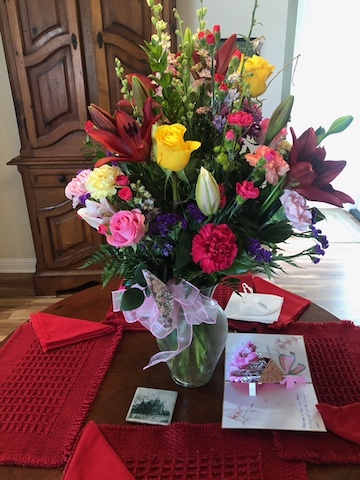
Hello. Happy Mother’s Day to all the moms out there! I’m relegated in life to being a dog mom, but I admire all the hard work and support that human moms give, especially my own mother who lives far away in California. I’m sad not to be there with her on this occasion, but I had this bouquet delivered to her, which I think she is enjoying. I like all the colors and its feeling of spring. It makes me happy, especially during these pandemic times.
In fact, we are experiencing more severe Covid restrictions here, many public places are closed again, and even outdoor tennis and golf have been regulated. Now in order to play these sports, we must be from the same household. Ugh, it’s going to be at least three weeks of this, or more. So we hang on … again. At least bike riding and gardening are still allowed. I send my thoughts to India, which is really struggling now with Covid; let’s hope the country can overcome its dire situation. Meanwhile I’ll leave you with a couple reviews of what I finished lately.
Miss Benson’s Beetle by Rachel Joyce / Dial Press/ 368 pages / 2020
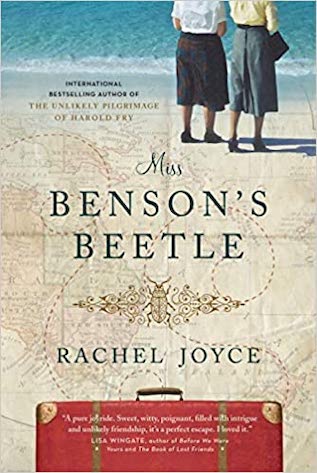
This is a novel I read for my book group that wanted something “uplifting” to read and discuss. Rachel Joyce is known for her feel-good stories … and I think this is about my third novel I’ve read of hers over the years. They’re often sweet, rousing stories that usually entail a quirky or very lonely character who unpreparedly takes a journey of some sort and discovers friends and a lot about themselves and the world in the process.
This novel is about two quirky ladies circa 1950 — one is a former teacher, spinster Margery Benson and the other is her assistant, talkative Enid Pretty who Margery hires at the last minute to go with her. They embark on a journey to New Caledonia in the South Pacific to find a particular gold flecked beetle, not yet documented. The two women are opposites, who while facing many obstacles to their island expedition, become close friends. Enid has always wanted a baby … and Margery has always hoped to find the gold beetle. They are the yin to each other’s yang so to speak, often in a humorous way. But because of their backstories that begin to get revealed … things with Enid are not exactly what they seem, and they appear to have some people after them, including a deranged WWII POW and a prim society type on the island who has a feeling that something must be amiss with these two riffraffs.
I think my favorite part of the novel was not exactly all the shenanigans that go on and the obstacles the two ladies face, but more the part about New Caledonia and their trek on the mountain in the north of the Island to find the beetle, which are quite visual. I was enticed by the island and jungle in the story and how the two ladies come to appreciate it. I wanted them to settle up and make things right with all so they could stay at their endearing rundown bungalow at the base of the mountain.
But the ending sort of gets crazy and didn’t exactly do, or resolve it, for me. Still it’s a quick, fun read about women who being held back by society and at work in the 1950s — finally instead of accepting it — just go out and do the adventurous things they’ve always dreamed about doing in order to fulfill their lives, which is an admirable theme. In a way perhaps, it might be a little reminiscent of the free spirit of Thelma and Louise. Ha.
Dear Ann by Bobbie Ann Mason / Harper Books / 352 pages / 2020
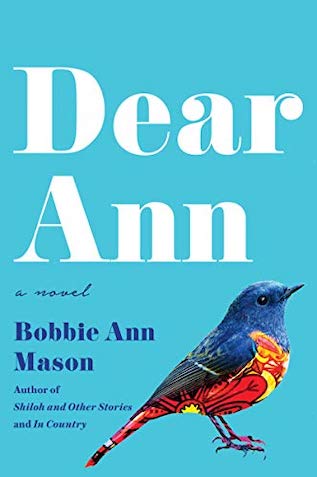
In the 1980s, I remember reading and liking author Bobbie Ann Mason’s novel “In Country,” which must have made an impact on me when I was younger … about the Vietnam War and a veteran who has PTSD. There was even a 1989 movie of it starring Bruce Willis and Emily Lloyd. Though I’m sort of foggy about it now, I’ve thought pretty fondly of Bobbie Ann Mason’s writing since then. But I haven’t picked up another of her books until I saw the audiobook of this novel, which she put out when she was 80.
Dear Ann is a story about a woman looking back on her life and wondering what might have been if she had gone to Stanford for graduate school in literature in the 1960s instead of Harpur College in Upstate NY. She imagines a whole storyline of what her life might have been like in California at the center of all the cultural changes, delving into the atmosphere of the 1960s amid the antiwar protests, hallucinogenic drugs, summer of love, and music and literature.
The woman, Ann from Kentucky, narrates about her life during her Stanford years so convincingly with her friends, her literature studies and profs, and her relationship with her college boyfriend Jimmy … that after a while I was a bit confused whether Ann indeed goes to California and if Jimmy is there. But Ann tells us early on which direction she takes (so I promise I’m not ruining the book) and by the end it becomes more clear.
One thing I liked is its love story between Ann and Jimmy, who is quite the character … and seems to be really struggling with his idealism during those days. He has a bad trip on a drug and is bothered that the poor are bearing most of the brunt of being drafted to Vietnam, which causes him a dilemma. There’s quite a bit to think about with this novel and you’ll want to stay tuned to see what happens to Ann and Jimmy. With a tinge of sadness, it lends perspective to life’s paths and loves that could’ve been taken and the paths that were taken instead. The homage to the 1960s surely comes through with details about the music, events, and thoughts of the era.
It’s a bit weird because early on I almost quit on the novel as I wasn’t sure where it was going, or what it was doing, and I was getting impatient, but I’m glad I stuck with it and took my time. In the end, I was rewarded by going back in time with author Bobbie Ann Mason and her characters. Surely she knew the 1960s, and perhaps the idealism squashed back then. Sometime I hope to check out her 1999 memoir “Clear Springs,” which was a finalist for the Pulitzer Prize.
That’s all for now. What about you — have you read these novels or authors before, and if so what did you think? Have a great week.