
Spring Break Revival

Here’s wishing everybody a very Happy Easter and spring break (if you plan to take one). I’m recently back after cruising the beautiful scenery of southern Arizona, which was terrific! My husband and I explored all around Tucson and also enjoyed a week bicycling southeast of there and staying in the small towns of Patagonia, Tombstone, Bisbee, and Sierra Vista. We biked in a 50 person group with the organization Adventure Cycling Association, which is an excellent nonprofit that promotes bicycling and offers tours in the States. You might know of it, if not I heartily recommend its “adventures.”

We camped a bit on the trip, which was pretty bold for me as I’m not usually a camper (what was I trying to prove?) — and the mornings in the desert were quite brisk. It felt like frost one morning and I recall tepidly putting my feet into what seemed like frozen shoes. Ouch. But luckily every day warmed up very quickly and by midday we were cycling our 40 or 50 daily miles, slathered with sunscreen and worried about too much heat. The sun there is very intense, especially for pale Canadians! Now I have weird tan marks all over and feel like a zebra when wearing shorts.

Some of the sites we saw and would recommend are: hiking in the Sonoran Desert amid all the spectacular cactus including the tall Saguaro cacti; visiting the Kartchner Caverns with its remarkable mineral deposits and formations; touring the Desert Museum outside Tucson, which is an immersive outdoor experience and is considered one of top museums in the country; taking a tour at the Titan Missile Museum, which offers a daunting look at a nuclear weapon system and underground facility the U.S. had on standby during the Cold War; and lastly, taking a mine or museum tour in the town of Bisbee, which lies amid the Mule Mountains and is world renowned for its diverse minerals and wealth of copper.

Who knew so much was there? I suspect this is only a tip of the iceberg in southern Arizona. We’ll have to go back sometime for more.

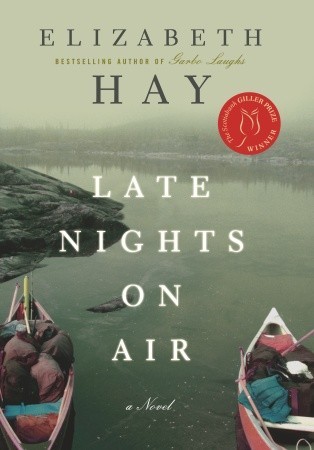
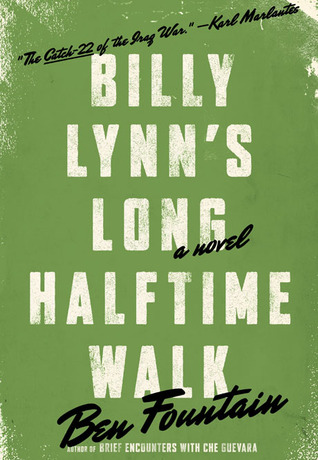
Meanwhile my reading didn’t fare as well as my sightseeing, but I’m midway through Canadian author Elizabeth Hay’s novel “Late Nights on Air” which won the Giller Prize in 2007 and takes place at a radio station in the far northern Canadian town of Yellowknife in 1975. I’m liking it so far, though not a lot has happened. I’m also almost done with the audiobook of Ben Fountain’s 2012 award-winning novel “Billy Lynne’s Long Halftime Walk,” which I almost put down at first but now is gaining ground with me. I should be finished soon so tune in next week for reviews of these two books.

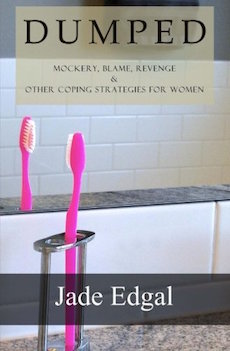
The one book I did finish this past week was a short-ish one by a friend of mine whom I met at the dog park. We walk our dogs together there at times and that’s where I first learned of her funny sense of humor. After a couple years of going to the park, she told me of the book she was writing for women about coping after they’ve been dumped in relationships with men, and I agreed to read it. (She writes under the pseudonym Jade Edgal, how cool is that?)

Her self-published book “Dumped: Mockery, Blame, Revenge & Other Coping Strategies for Women” is quite a funny lambasting of the male species — as we know it — and a guide on how women can avoid becoming jilted fools and how to prevent relationship train wrecks in the future. I laughed while reading it. Quirky, sarcastic, absurd, and rather wicked, “Dumped” is not only a humor book but is also a helpful, truthful guide to moving on with one’s life after a terrible breakup. If you’re in such a mess, or if dating isn’t going well for you, you might find it helpful to pick up this book that’s filled with considerable levity and insight. It includes examples from the author’s personal experiences and from life in general. If you’ve ever been dumped, then you might find yourself laughing — as I did — instead of weeping into your bowl of soup.

Meanwhile this coming week I have a lot of catching up to do, and I hope to visit all of your blog postings, which I missed while I was away. So I’ll be in touch!

What about you — have you been to southern Arizona or do you plan to take a trip somwhere this spring? Or have you read Ben Fountain’s or Elizabeth Hay’s books? And if so, what did you think?

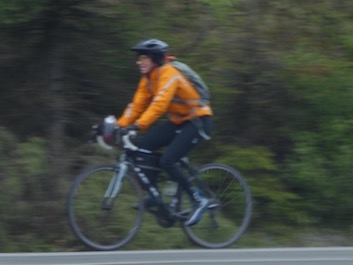
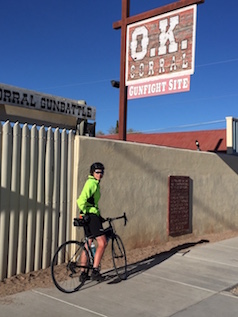
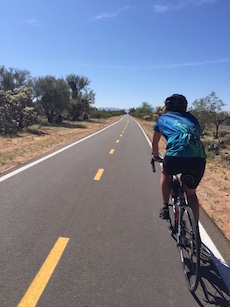
PS. Who is this slow person to the left? And would she mind staying to the far right of the bike path! While I’m back home now in Canada, I can’t help but bring on some more Arizona dreaming.

Posted in Books | 32 Comments

The North Water and Between the World and Me

Tomorrow my husband and I are headed off on a bike trip with a group around southern Arizona for a week. It’s our spring break, so to speak. Since there’s a few nights of camping involved along with the cycling, I’m not going to be bringing a computer or blogging during the trip. That will have to come after. It’ll be a break of sorts — to lap up the scenery, get fresh air, and renew ourselves. But before I go, I want to leave you with two quick takes on books I finished this past week.

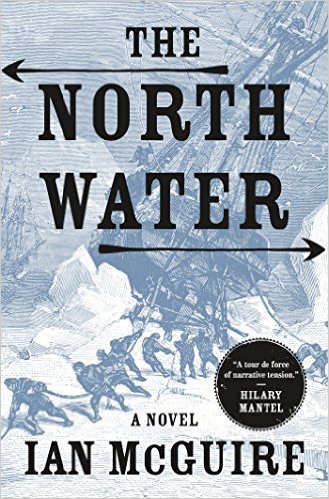
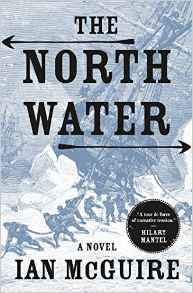
First off, Ian McGuire’s new novel “The North Water” is a doozy of a page-turner. It’s about a 19th-century whaling ship that sets sail for the Arctic with a killer onboard. Needless to say, the story got its hooks into me early on and didn’t let go until the end. Not only is there a shipmate onboard secretly committing heinous crimes, but there’s also a plot by a few to purposely scuttle the ship to get the insurance money. The only crew member to figure out who’s behind both acts is an ex-army surgeon (Patrick Sumner) whose reputation has been ruined by past mistakes while serving overseas. Will he be able to shrug off his own demons and stop them in time? Or will they perish amid the arctic winter?

I thought the author did a wonderful job at capturing the 19th-century feel of the characters and the realities of the whaling trade, and the arctic landscape in a suspenseful way. But be forewarned: “The North Water” involves quite a lurid, gritty tale with considerable harsh language to boot. The whaling industry back then wasn’t exactly for the squeamish. While it might be too much for some, to me the book’s depictions seemed realistically evocative of the place and times.

I found “The North Water” to be an easy, quick read — well written — with plenty of intriguing imagery and action. While anyone who likes adventure kinds of tales might surely like it, the book would probably especially interest those who have liked books such as I have on the Whaleship Essex tragedy, and Franklin’s lost expedition, and other arctic and whaling tales. In that respect, it was a book with a subject matter right up my alley. (Thanks to the publisher for providing me with a copy to review via NetGalley.)

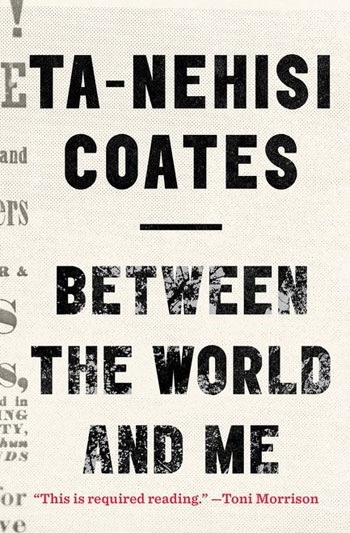
The second book I finished this week was an audiobook of Ta-Nehisi Coates’s nonfiction 2015 bestseller “Between the World and Me,” which takes the form of a letter written to the author’s son warning him of the dangers of being black in America today.

This book pretty much lit up the blogosphere when it came out last year, and I think it was JoAnn over at Lakeside Musing who said the audio was a must listen. So I got on a long list for it at the library. Then I listened to the book twice this week, which is indeed powerfully read by the author. You can tell Coates has written poetry as his book is quite lyrical sounding and like poetry in places. I loved the audio version for this reason — it’s a book that seems meant to be read aloud — only I missed being able to mark sentences that I particularly wanted to note — which I could’ve done easier if I had the book in print.

“Between the World and Me” is a strong cup of coffee — thought-provoking, frank, unflinching, and challenging in a good way. It boils over the American history, traditions, and laws that have plundered black lives and over police brutality cases and the culpability of the democracy that made the police what they are. At one point in the author’s discussion he says whites are just interested in personal exoneration, and he isn’t too hopeful for any change ahead for racial harmony in America.

His perspective and experiences are quite fascinating. I particularly felt his sections on Prince Jones, his Howard University schoolmate who was gunned down by a police officer, were some of the strongest of the book. His outrage and sorrow palpable. His talk of the Sept. 11 attacks were less agreeable to me. But all and all I found “Between the World and Me” powerful and illuminating. It made me want to read more of James Baldwin’s books, which apparently had inspired Coates’s book.

What about you — have you read “The North Water” or Ta-Nehisi Coates’s book and if so, what did you think?
Posted in Books | 27 Comments

March Preview and Week in Review

Happy March. We’ve just about made it to the start of spring, which is always a bit exciting for those living in a Northern country. Though May is usually the time when a lot of flowers open and things turn green up here. Still it’s the thought about “spring” that counts. But this past week has been rough as I unexpectedly had to return to D.C. to visit a friend under palliative care in the hospital. I’m glad though that I was able to visit with her and her daughter for a few days; it made a big difference for me and hopefully I was able to help a little.

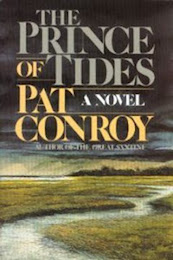
While in D.C., I was sorry to hear that author Pat Conroy had passed away on Friday. I was a big fan of his novel “Prince of Tides,” which I remembered sneaking away to read in the employee breakroom at the U.W. Many years later, I took my page-worn copy and stood in line while Mr. Conroy was on a book tour with his novel “Beach Music.” I remember the line to meet him wrapped around the building and parking lot of a shopping mall in Virginia and round and round it went, but I was determined to meet him so wait I did. I finally got to the front of the line and he said some nice things and signed my copy of “Prince of Tides.” I thought he was great. He was a Southern rock star of a writer and a good guy to boot. “Prince of Tides” was undoubtably my favorite book of his, but which one is yours?

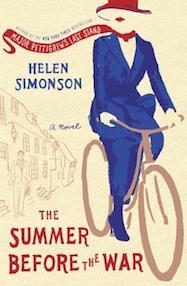
As for new fiction releases, this month is plentiful with an array of talent. There’s new ones by veteran authors: Pat Barker, Edna O’Brien, Tracy Chevalier, and Jim Harrison among others. And I’m hopeful that Helen Simonson’s new novel “The Summer Before the War” might be as good as her charming 2010 debut “Major Pettigrew’s Last Stand,” although I’m seeing a few mixed reviews about it, so we will see.

In the meantime I’ve picked up “The North Water” by British author Ian McGuire, which a publisher passed my way, about a 19th-century whaling ship that sets sail for the Arctic with a killer onboard. Author Hilary Mantel calls it a “tour de force of narrative tension and a masterful reconstruction of a lost world that seems to exist at the limits of the human imagination.” So far it’s a fairly coarse, but seemingly realistic depiction of seamen in the 1850s whaling trade. But the story has me in its grip. So stay tuned: I plan to review it next week.

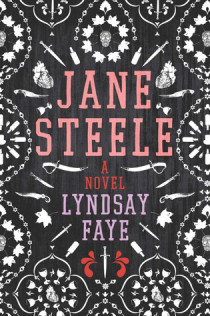
Other March novels that look enticing include: Lyndsay Faye’s new one “Jane Steele,” which is said to be a Gothic retelling of “Jane Eyre” — a reimagining of Jane as a gutsy, heroic serial killer. It’s said to be “wonderfully wicked” with author Suzanne Rindell describing it as a “darkly-humorous, elegantly-crafted story of an ‘accidental’ vigilante.” I haven’t read Lyndsay Faye before, though her novel “The Gods of Gotham” received considerable recognition when it came out, so count me in for this one.

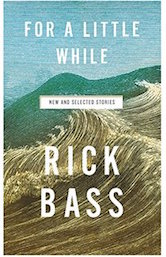
Also Montana author Rick Bass has a new collection of short stories out called “For a Little While” that gathers his best stories together, 18 from previous collections and seven new tales. Admittedly, I’m not usually a big reader of short story collections, but Bass’s latest has been getting rave reviews and wide recognition. Joyce Carol Oates calls it “nothing short of remarkable” and William Kittredge says Bass’s “name will be on notices alongside Raymond Carver and Flannery O’Connor.” So I’d say it’s about time I sampled his short fiction.

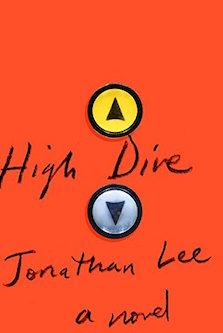
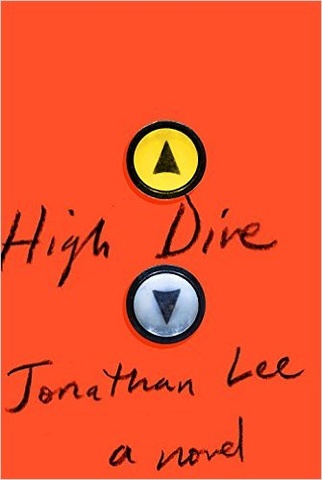
Lastly two other books from authors across the pond have caught my attention. First British author Jonathan Lee’s new novel “High Dive” is based on the real 1984 assassination attempt on Margaret Thatcher’s life by an exploding IRA bomb at Brighton’s Grand Hotel. Publishers Weekly calls it an “incredible novel of rare insight, velocity, depth, and daring,” and authors Lauren Groff and Tea Obrecht are among many others hailing its praises. It makes me think “High Dive” could be one of the year’s best, but we will see.

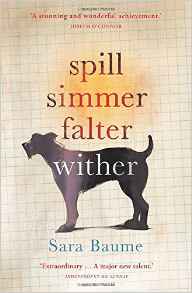
The other book is a debut novel by Irish author Sara Baume called “Spill Simmer Falter Wither,” which is about a misfit man who adopts a misfit dog. Apparently after the seaside village where they live shuns them, the unlikely duo takes to the road, providing comfort to each other’s lives. Anne Enright says the book is “a flame in daylight: beautiful and unexpected,” and Booklist calls it “elegant, heartbreaking, and inspiring.” I can’t resist a good dog story so count me in for this small, quiet novel.

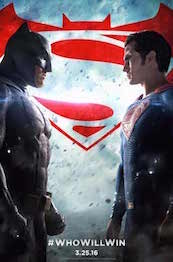
As for movies in March, all the talk is about “Batman v. Superman: Dawn of Justice.” Ben Affleck vs. Henry Cavill. I’ll take Cavill thank you very much. In this movie apparently the Caped Crusader has a tiff with the Man of Steel (okay it’s more than a tiff) but eventually they team together to fight Lex Luthor, this time played by a seemingly demented Jesse Eisenberg. It’s true that I’m not the big superhero, movie-watching girl that I once was in the Christopher Reeves days — I never even saw the 2013 flick “Man of Steel” with Cavill and Amy Adams — so I’m not likely to rush out to see this one, but who knows? Maybe I’ll need a Henry Cavill fix, or an urge to revisit the Caped Crusader’s mask once again.

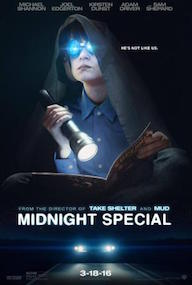
My two actual movie picks this month include “Midnight Special” about a kid who possesses special powers, which looks a bit like a “Close Encounters” kind of movie. It’s by the same writer and director who made “Mud” and “Take Shelter,” which I liked, so this one should be decent too. Then there’s Nanni Moretti’s Franco-Italian film called “Mia Madre” about a film director in the middle of an existential crisis, who’s unable to accept that her mother’s dying. It looks good and has received a 91 percent favorable rating on Rotten Tomatoes. So “Mia Madre” it is for me.

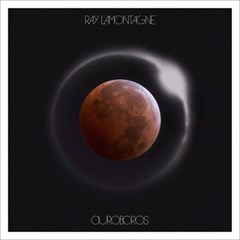
Lastly in albums for March, there’s new ones by three notable male singer-songwriters namely: Ray LaMontagne, Pete Yorn, and the late Jeff Buckley. Wow what a trio. I’ve long been a big fan of LaMontagne’s music. He’s wonderful as is his music, though his latest album the cosmic “Ouroboros” sounds a bit like a departure from his folk roots kind of stuff, which I might lament. But if I need more of that perhaps I can turn to Jeff Buckley’s posthumous album “You and I.” It’s a collection of 10 of his demo tracks, which are mostly covers, or I can check out Pete Yorn’s sixth studio album called “Arranging Time.”

What about you — which books, movies, or albums are you looking forward to this month?

Posted in Top Picks | 31 Comments

The Oscars, Americanah, and Wave

Thanks to those who commented last week about Harper Lee’s legacy and books; there was quite a good discussion with various excellent points raised. Now today is the Academy Awards, which has its share of controversy this year (or once again) for its lack of racial diversity in its nominations. Some actors are boycotting it, believing some films and actors have been overlooked. I read an interesting New York Times article this week, which is worth checking out called “What It’s Really Like to Work in Hollywood (*If … a straight white man.)” It gives some good insights by various actors about instances of discrimination and racism they’ve faced in the industry, which aren’t hard to believe. I’m sure Chris Rock will have a bit of a field day about the diversity issue, which should be good, when he hosts the Oscars tonight.

My guess is that the film “The Revenant” will likely take home a few of the big awards, perhaps Best Picture, Best Director, and Best Actor — though it’s quite a rough and brutal film. For that reason alone, it’s not exactly my favorite film of the year, but I’m glad I saw it — some of its shots and cinematography are exceptional and I liked its mystical and metaphorical qualities. I’ve seen most of the films nominated this year. My favorites were: “The Big Short,” “Spotlight,” and “Room.” After those I liked “Bridge of Spies,” “Brooklyn,” “Steve Jobs,” and “The Martian.” A couple others I saw this week were the foreign film “Theeb” and the documentary “Cartel Land.” Both were pretty good, and reminded me of how films such as “Spotlight” and “Cartel Land” that address such important issues can be so powerful. Three films I haven’t seen yet are: “45 Years” with Charlotte Rampling, “The Danish Girl” with Eddie Redmayne, and the Hungarian film “Son of Saul,” which is favored to win Best Foreign Film. I’m sure to get to them in time.

Meanwhile I (finally) finished Chimamanda Ngozi Adichie’s 2013 lengthy novel “Americanah” which is a book I picked for my book club to discuss next week. It’s a story that revolves around two main characters, Ifemelu and Obinze, who fall in love as teenagers growing up in Nigeria — and leave because of their country’s military dictatorship to pursue school — she in the States and he in England. They part ways for over ten years, but eventually meet again when they both return to live in Nigeria — both wondering how much the Western countries have changed them.

The novel is an African immigrant story that’s primarily about race and identity. Ifemelu, who never thought about being black in her native Nigeria, is forced to grapple with it for the first time when she comes to live in America. Her observations about race are shaped as she vies unsuccessfully for awhile to get employment, affordable housing, and finish her schooling. While in America, she has a relationship first with a rich white guy, and later with an African-American professor — while starting an anonymous blog about race in America that instantly becomes popular.

This was my first Adichie novel (I hope to get her other two sometime) and the three things I particularly liked about it were:

  • Adichie and her protagonist Ifemelu have a very keen eye for observation. There were times when I thought: Wow how did she pick up on that. She seems to anticipate and know people, places, thoughts and bring them to light before you’re aware.
  • “Americanah” is also highly readable and accessible and a breeze for the most part to get through.
  • It’s ballsy too. Adichie addresses race head on in this book, not only about the subtle and non-subtle ways racism pervades the West, but also its variations as it pertains to African Americans and “Non-American Blacks.” It sheds considerable insight into the African immigrant’s experience and the mix between races.

My only slight criticism of the novel is that towards the end I thought it went on a bit too long and that it could’ve been cut shorter. I kept waiting for the two characters to finally meet up again. And perhaps in a few places certain aspects or characters seemed to be more just a foil for her commentary than add much to the story. Perhaps I liked diving into the story more than its over-abundance at times of commentary.

Lastly this week I finished the audiobook of Sonali Deraniyagala’s 2013 memoir “Wave” about a survivor of the 2004 tsunami in Sri Lanka who lost her parents, her husband, and her two young boys when the wave hit. I’ve had it on my TBR list for a long time and finally downloaded it from the library — though I was duly scared of its horror and grief.

And right I was to be: as the first half is agony to listen to someone who’s lost their entire family. The shock and grief are stunning. I wanted to find the author’s family in my dreams and give them back her. I wanted to make the world right again for her. But only Superman could undo time. I was amazed by how well the audio’s narrator (Hannah Curtis) managed to get through parts of the book without breaking down. She read it well and was a pillar of strength when I was ready to crack.

I’m sure the book isn’t for everyone: it could be too much for some. But I think it does honor those in the disaster to read about victims stories and to know what happened. The earthquake and tsunami that followed were one of the deadliest natural disasters in recorded history, killing 230,000 people in 14 countries. God, I remember exactly where I was when it happened on Boxing Day (the day after Christmas) in 2004. I was at a ski resort with my family skiing in Colorado. How awfully incongruous life can be: people are dying by the thousands on the opposite side of the world — while others are surrounded by family getting on a chair lift. It made no sense and seems sickening — though it took awhile for the scope of the disaster to be fully known.

But the memoir isn’t total agony — as it goes on it becomes something more — a study of grief and memory over the passage of time. Whereas Sonali, the author, once couldn’t bear things that reminded her of her family, she now welcomes them and seeks to integrate the memories of her family into her everyday life. The book lightens towards the end and shines love into those she lost, going back in time to tell of their history together. I thought the book seemed very honestly and beautifully done. It has courage and heart and insight into the universality of the human experience.

How about you — have you read “Americanah” or “Wave” and if so, what did you think? Or what films were your favorites this year? Do you plan to watch the Academy Awards?
Posted in Books, Movies | 25 Comments

Pioneer Girl and a Week in Review

I was sad to read of Harper Lee’s death yesterday. I had reread her 1960 classic “To Kill a Mockingbird” last year and had re-watched the 1962 movie version of it too — all in preparation for the 2015 release of her book “Go Set a Watchman,” which is generally considered to be an early draft of “Mockingbird” written in 1957. But — ugh – everything in “Watchman” seemed to turn “Mockingbird” on its head.  I didn’t like it much and thought the writing in it to be fairly forgettable too.
 
And now with Harper Lee’s passing, I wonder: do I wish “Watchman” had never been released?  Probably, yes.  I sort of always liked the idea of Harper Lee having written just one novel, one classic – sort of like Ralph Ellison did with “Invisible Man,” which I loved too.  But now with “Watchman” out there, it muddies the waters and presents more of a complex picture of what Harper Lee wrote and how “Mockingbird” came to be, which I guess isn’t necessarily a bad thing.  I too was eager at first to reacquaint myself with an older Scout but sometimes prequels or sequels don’t always turn out to be what’s best.  I’ll always be fond of the 1960 story and characters, but now I’ll just know that they grew out of something else. What about you – do you feel it was too bad that “Watchman” was released when it was?
 

Meanwhile this week I’ve been working my way through Chimamanda Ngozi Adichie’s 588-page novel “Americanah,” which I’m reading for my book club.  I’m not done with it just yet, but I’m marveling at how readable the novel is and how the story hasn’t sagged for me yet despite how long it is.  I’m usually not a fan of overly lengthy, thick novels so I’m pleasantly surprised by this one. It flows and entertains and keeps me wanting to find out what will happen at the end to the two main characters.  It also offers an interesting commentary on race and class along the way. I plan to finish and review it sometime next week.
 

I did finish the audiobook of Bich Minh Nguyen’s 2015 novel “Pioneer Girl” this week and enjoyed it quite a bit. It’s about an American Vietnamese girl (Lee Lien) who upon finishing her Ph.D. in literature returns home to the  Chicago area for awhile to help out in her immigrant family’s restaurant. But while there, her brother steals their mother’s jewelry and takes off for California, leaving Lee with their mother’s gold leaf brooch that was left behind in their family’s Saigon restaurant years ago by American reporter Rose Wilder Lane, the daughter of author Laura Ingalls Wilder. Soon Lee begins investigating Rose and Laura’s histories and whether the brooch is indeed an heirloom of the famous author’s, whose books were a favorite of Lee’s as a child.
 
It’s neat that the story explores both the Asian American experience of growing up in a strict, hard-working immigrant family in the Midwest, as well as being part literary mystery into the details of Rose and Laura’s lives. In their own ways, Lee and the Wilders are all “pioneer girls,” or at least Lee is drawn to Rose and Laura as being such. Lee’s life with her own tough mother and deceased father alternates chapters of Rose and Laura’s fractured lives. It’s an interesting parallel and one I found quite insightful and engaging.

I hadn’t thought of Laura Ingalls Wilder’s “Little House on the Prairie” books in a long time. I had read and liked them as a kid, and sometimes watched the TV show based on the books, but this novel brought them back to me — and left me wondering about Laura and Rose’s collaboration on the books — with Laura as the writer and Rose the editor. Bich Minh Nguyen’s novel makes me want to read “Pioneer Girl: The Annotated Autobiography” by Laura Ingalls Wilder with editor Pamela Smith Hill, which came out in 2014 and apparently has a lot of new details into the family’s pioneer and writing lives.

It’s cool when a novel such as Bich Minh Nguyen’s can tell an interesting story about a girl’s immigrant roots and self-discovery and espouse a love of literature at the same time. What’s not to like?! For those who loved the stories of Laura Ingalls Wilder’s this book is especially for you.

Ps. I didn’t realize beforehand that Nguyen was married to fellow novelist Porter Shreve. I had met him many years ago in D.C. where he signed a copy of his debut novel “The Obituary Writer” for me. It’s quite a fun novel as I recall.

What about you — do you have any thoughts about Harper Lee’s legacy, or Adichie’s novel “Americanah,” or Nguyen’s novel “Pioneer Girl” and if so, what are they?


Posted in Books | 39 Comments

My Name Is Lucy Barton and Everything, Everything

I’ve had a great week visiting old friends and playing tennis in the Virginia/D.C./Maryland area, but I’ve been “on the Go” quite a bit so I haven’t read much of anything this week (other than restaurant menus, LOL) but I look forward to diving more into Chimamanda Ngozi Adichie’s novel “Americanah” on the plane ride home. That’s a book I picked for my book club, so I hope it’s a good one to discuss with others.

Meanwhile last week I finished two slim but interesting novels. The first being Elizabeth Strout’s latest book “My Name Is Lucy Barton,” which like her first novel “Amy and Isabelle” involves a mother-daughter relationship. Strout seemingly loves this dynamic and is awesome at exploring its ties. Over the years, I’ve read all of her novels except her 2006 one “Abide With Me,” which must have slipped past me, though I’m sure I should rectify that.

Her latest one is a melancholy novel narrated by a thirty-something wife, mother, and writer named Lucy, who after an operation spends nine or so weeks in the hospital in the mid-1980s recovering from an infection she gets post-surgery. While there, she is visited for five days by her estranged mother who she hasn’t been in touch with much in many years but still loves dearly. In trying to reconnect, Lucy is flooded with memories from her lonely childhood, growing up in poverty with her parents, sister, and brother outside a small farming town in Illinois, and from her married life since then in New York City.

It’s a book in some ways that feels more like observations or reflections than a full story. You may keep waiting for the story to begin when in fact these memories of her life and interactions with her mother from her hospital bed are what make up the book. Many writers probably couldn’t pull it off, but with Strout there’s various layers going on that drew me in — notably the subtleties of the mother-daughter reconciliation; the fact that Lucy in her married life has risen above her upbringing but is still marked by it; and by how the advice she receives from an author while attending a writer’s workshop pertains to her life.

These things and the fact that Strout is a writer that often hits upon heart and bone when exploring family ties and class — is what makes me pick up her books each time. There’s a truth in her writing. Maybe in some slight ways she’s a bit like author Anne Tyler that way but also different too. Strout’s character Lucy is surely a ways apart from her character Olive Kitteridge, yet both are no strangers to loneliness and sadness. This book though has a different arc and scope than that one — narrower but with a few layers that kept me going.

My second book last week was Nicola Yoon’s very popular 2015 young adult novel “Everything, Everything,” which I listened to as an audiobook. I don’t pick up many YA novels — perhaps my last one was John Green’s “The Fault in Our Stars” or Suzanne Collins’s “Hunger Games” trilogy, but I can see why this one engaged so many readers.

I might be one of the last bloggers to get to Yoon’s book — as it was checked out at the library for months — but for those who haven’t heard the novel is about a whip-smart 18-year-old biracial girl named Madeline who has an immunodeficiency condition and can’t leave her sealed, air-filtered house where she lives with her physician mom and a full-time nurse. But then a boy, Olly, moves in next door and she falls for him (mainly over the internet and through her windowpane) and begins to want to risk her health to be with him in the outside world.

I was pretty entertained by the start of the book. Madeline is a bright and avid book reader, and the story creatively includes in its telling some of her small books reviews, quotes, emails, and instant messages with Olly. Her narration too is pretty upbeat for someone stuck inside house-bound for so many years whose heart rate, blood pressure, and breathing are constantly monitored. Though you can’t help but feel sorry for her since she’s alone a lot without much interaction except for a couple tutors, her nurse, and playing games with her mom at night. That is until she meets Olly, whose world is complicated too because of an abusive father.

As their friendship grows you begin to wonder: what will happen, and if Madeline and Olly will take a risk outside their worlds. The story seems to be building along just fine, but then a major twist happens toward the end, which I didn’t think worked and felt pretty creepy to me. It was like Ick. The twist bummed me and the story never really recovered for me after that, which is too bad. I did like the metaphor or moral of the story which I took away to be that: living an overly protected life can often be worse than the risks, and that it’s better to risk heartbreak then be trapped inside your house by fear. I appreciated that part of story, but just not the twist it used in getting there.

What about you have you read “My Name Is Lucy Barton” or “Everything, Everything” and if so what did you think?

Posted in Books | 21 Comments

February Preview

February is already here and trying to escape me. Tomorrow I leave for D.C. and Virginia for a week to visit friends and my old digs. It should be fun but what’s this talk about a chance of more snow there? Meanwhile I’ve been looking at what’s coming out in February releases, and it appears such well-known authors as Joyce Maynard, Ethan Canin, and Yann Martel have new fiction out. After how good “Life of Pi” was, I was really looking to grab Martel’s latest novel “The High Mountains of Portugal,” which I still might, but it seems it’s been getting some lukewarm reviews. Hmm. Could it be true?

So instead I’m looking at a few other fiction releases. Kristopher Jansma’s new novel “Why We Came to the City” might be just the ticket. It’s supposed to be both funny and heartfelt about a group of twentysomething friends in New York whose lives are upended by tragedy. Author Emily St. John says it’s an “elegant and deeply moving meditation on friendship and mortality” and Publishers Weekly calls it a “compelling paean to New York City” about “post-college friends who manage the vagaries of love and friendship against the backdrop of living in the big city.” Hmm I’m game, as long as it’s not Sex and the City Part 2.

Then there’s Dawn Tripp’s new novel “Georgia” about the life of artist Georgia O’Keefe. I know I’ve said in the past I’m not big on novels that fictionalize the lives of famous real people, but this one is getting a lot of strong reviews, and how can I resist reading about O’Keefe’s life, once again? Author B.A. Shapiro says “Georgia” is a “dazzling, brilliant work about the struggle between artist and woman, between self and the other, between love and the necessity to break free of it.” Hmm. Count me in.

Also February wouldn’t be complete without a good survival tale to add to the TBR pile so I’ll mention Diane Les Becquets’s debut novel “Breaking Wild.” It tells the story of a missing woman in Colorado and the female ranger who’s hellbent on finding her before it’s too late. Author Andre Dubus III says “what sets this novel apart is how deeply its author dares to venture into the psyches of her two unforgettable protagonists.” It’s also touted by authors Wiley Cash and Tana French among others. So it might be the perfect thing for a quick winter read.

Lastly in new fiction, I’m curious about Canadian author Peter Behrens’s historical epic “Carry Me” about a complex love affair of a non-Jewish man and Jewish woman hovering precariously between the two World Wars. They grow up on the Isle of Wight and later reunite in Frankfurt and Berlin, where, after Hitler’s rise to power, they look to escape. I don’t know too much more than that, but the novel has received quite a few five-star reviews from readers on Goodreads and Amazon, many of whom say Behrens is a master storyteller and one not to miss. I have not read his two earlier novels, so this may be my chance to try his writing out.

As for movies in February, I’m probably not going to be rushing to the theater for many. There’s a couple of comedies such as “Zoolander 2” and “How to Be Single” that might have a few laughs — and two sports movies “Race” about runner Jesse Owens and “Eddie the Eagle” about the U.K.’s first ski jumper, but it’s not like I’m looking to see these on the big screen. So for my movie pick this month, I’ll choose the Coen brothers’ spoof of old Hollywood “Hail, Caesar” because it looks absurd and fun at the same time — and it’s hard to resist the makers of “The Big Lebowski” and “Fargo” among others. I usually can’t.

Lastly for albums out this month, there’s some big names with new releases: Kanye West, Elton John, Bonnie Raitt, Vince Gill, Lucinda Williams, and Wynonna Judd among others. I’ve really liked both Bonnie’s and Lucinda’s music in the past. They’re Giants. Titans. Masters. Of course I’ll listen to their albums. But for something new, I’ll pick the talented young Canadian singer Basia Bulat’s album “Good Advice” as my choice this month.

What about you — which books, movies, or music are you looking forward to in February?

Posted in Top Picks | 26 Comments

The Wright Brothers and The Paying Guests

I wish I could say that I have some distant relation to the famous Wright brothers but all I can say is that we share a surname. Still this was good enough for me when I was little when I could pretend these inventors of the airplane and the first successful pilots of powered human flight were of some distant relation to me. Though of course Wilbur and Orville were lifelong bachelors, so they couldn’t exactly be my great grandpa or some such, but still their mother’s married name was actually Susan Wright, so that’s pretty cool. For these and other reasons, I’ve always been curious about these famous Wrights so I’m glad to have plowed through David McCullough’s 2015 book about them.

There’s so many details in the book that I had either forgotten from my grade school days or never knew about the Wright brothers. All I recall was that the Wright brothers owned a bicycle shop in Dayton, Ohio, starting in 1892, which was cool of them to begin with, and eventually began experimenting on building a flying machine along the beaches of Kitty Hawk, N.C. First they piloted gliders above the sand dunes and then eventually they equipped their plane with an engine, and made four history-changing flights in Dec. 1903 and more a couple years later, leaving behind some really neat photographs of their flying days there. Voila that’s most of what I knew.

But it’s clear from McCullough’s book that the Wrights were much more impressive than I had thought or had taken for granted. For one thing, as the book makes evident: the brothers were high school dropouts, they had no formal technical training, no financial backers, no government subsidies, and little money of their own. To emulate flight, they watched and studied the wings of birds, read books, and made things from scratch. They were industrious, brilliant, and persistent to the core; they worked on their projects from sun up to sun down, using the little profit from their bike store to buy supplies. Almost six years older Wilbur was their leader, but both brothers worked, lived, and spent all their time together. Holy smokes in comparison to the Wrights, most of us seem pretty darn lazy.

I guess I didn’t realize that after their flights in 1903 and more in 1905 that the brothers accomplishments were quite overlooked or ignored, especially by the U.S. government, which showed little to no interest in their invention. Most couldn’t believe their machine could actually fly, and in France as in other places they were accused of bluffing. They were ridiculed to a great extent for quite awhile. Then came the official trials where Wilbur went to France to demonstrate their Flyer and Orville flew another at Fort Myers in Virginia. At each place they were successful, setting flying records and wowing crowds with their planes. But during one flight Orville crashed and broke various bones, and a passenger onboard was killed. His sister Katharine, a teacher, would spend many months nursing Orville back to health.

Who knew? And who knew: they made various flights in Europe in 1909, spent so many hours in the air, and that Wilbur flew over the ocean liner the RMS Lusitania in New York harbor, circled the Statue of Liberty, and continued up the Hudson River to Grant’s tomb and back. Moreover who knew their family was so close-knit (though their mother died when they were young) and that both Katharine and their preacher father would fly as passengers on their plane on at least one occasion, and that they would all continue to live together in Ohio when they weren’t traveling. Katharine didn’t marry till she was 58! (Apparently Orville stopped talking to her after that. He must have wanted her to remain unmarried like they did as bachelors, or some such nonsense.) Wilbur tragically died so early in 1912 at age 45 from typhoid fever. Curiously the book doesn’t dwell or elaborate on how that affected Orville who outlived him for another 36 years! The book also doesn’t go into a lot about the lawsuits that the Wrights were involved in over patents, their accomplishments, and planes. It merely mentions that aspect.

All in all McCullough’s book was enlightening in its details. I never realized how much the brothers overcame in doing what they did, and how much work went into it. How patient they seemed with the public. This book paints the Wright brothers not as two guys out for fame or glory but rather as two brothers wanting acceptance for what was rightfully theirs — for something they had done. One caveat I had with the book is that although it follows their story chronically with many facts and interesting details, sometimes I wished it breathed more life into them. It often quotes the brothers’ letters but still I felt a bit distanced from the Wrights, like they were cut-outs. Sure they could be enigmatic, modest, and shy but something seemed a bit missing in McCullough’s account. I guess it goes to show we often can not fully know such iconic historical figures.

Meanwhile this past week I finished British author Sarah Waters’s 2014 novel “The Paying Guests” on audiobook after a couple of friends had told me about its wonderful narration by actress Juliet Stevenson. They weren’t kidding! Stevenson expertly breathes life into each character and Sarah Waters’s storytelling is masterful in this absorbing post-Edwardian tale. I know the novel made positive waves when it came out a couple of years ago but for whatever reason I hadn’t taken the plunge till just now. And boy, did it transport me. I was caught up in the story’s setting of a big house in 1920s London that had seen better days, in which a widower (bereft of her sons and servants) and her 26-year-old spinster daughter take in a married couple as lodgers. In time an illicit love affair begins and eventually a crime (or accident?) happens which changes everything.

It’s an intense love story and period drama (Sarah Waters’s most potent novel so far!) that seems to hit its dialogue, descriptions, and interactions just right. Many of Waters’s novels spotlight lesbian protagonists and this one is no different — for those who need a warning. It’s a book with plenty of atmosphere, high anxiety, and suspense, but my only criticism is that it goes on far too long. Towards the end, the investigation into the crime and trial goes repetitively round and round a bit too much. (The audiobook is 21.5 hours long, which I could have listened to on a drive perhaps from here to Vegas.) I only wish the novel had been shorter and tauter, but still it’s a tale whose characters and haunting predicament get into one’s bones and one that I won’t soon forget. Bravo to the author.

What about you — have you read “The Wright Brothers” or “The Paying Guests” and if so, what did you think?
Posted in Books | 19 Comments

The Last 5 Movies

This past week I’ve been enjoying David McCullough’s nonfiction book “The Wright Brothers” and Sarah Waters’s novel “The Paying Guests” and will report back once I finish both. Have you read these? Meanwhile over the past few months I finished seeing the eight Oscar nominees for Best Picture and a few other films as well. Here are the last five movies I’ve seen:

“Room” — I wasn’t sure I’d be able to see this movie about a mother and son held captive in a shed for years, but I knew (even though I haven’t read the novel by Emma Donoghue yet) there must be something redeeming about the story, or else what’s the point of watching so awful a plot and subject matter. Indeed it’s the mother’s bond with her son and how she shields him from the horrors of the situation, creating an imaginative world in just a tiny room, that makes it special. The movie is reminiscent of the 1997 film “Life Is Beautiful” in which a father protects his son from the dangers in a WWII concentration camp. “Room” is not exactly an easy watch, but it’s definitely one of the most moving and heart-wrenching films of the year. My nails didn’t exactly survive in tact.

“The Revenant” — This revenge film — about a frontiersman (played by Leo DiCaprio) left for dead on a winter fur trading expedition in the 1820s — is brutal! Make no mistake about it! I’m not exactly sure I knew what I was getting into. What’s for sure is that Leo’s character has about nine lives in this movie. It’s rough to say the least, but for Leo I survived its Indian attacks, animal attack and its harsh conditions to make it through. But in reality I wouldn’t have survived one night in the frozen woods or five minutes in the river. “The Revenant” reminded me a bit of the 1972 film “Jeremiah Johnson” but had many more hardships to tackle. While I’d support Leo getting an Oscar for his performance, and liked the film’s cinematography, I’m not really rooting for the film to win Best Picture, though with its 12 nominations it’s likely the favorite.

“Carol” — While I liked and appreciated this film — about two women who develop an intimate relationship in the 1950s — for some reason for me it didn’t totally live up to all the hype I had heard about it. The performances by both Rooney Mara and Cate Blanchett are undoubtedly strong as is the direction by Todd Haynes, but somehow I didn’t get totally ramped up about the power of the story, or didn’t feel I knew the characters too well. I guess I wanted to like “Carol” perhaps more than I did.

“Mad Max: Fury Road” — This high action sequel set in post-apocalyptic Australia was definitely quite a wild ride. It features big truck and motorcycle chases across the desert going full blast amid a lot of gunfire, and has Charlize Theron teaming up with Tom Hardy, which isn’t too shabby. It’s action-packed for sure with a tyrannical bad guy, but it sort of made me long for the old Mad Max days of Mel Gibson. The first “Mad Max” movie in 1979 scared the heck out of me. And while “Fury Road” is a decent action flick, does it really deserve a Best Picture nomination? I guess I didn’t think so.

“The Big Short” — The funny thing is I really didn’t want to see this film about four guys who predicted the U.S. economic collapse of 2008. I just thought a financial film about the credit and housing bust might be drudgery to revisit those days. Did I really want to return to “the worst downturn since the Great Depression” again? But how wrong I was! “The Big Short” takes quite a creative approach to get to the bottom of the complex fallout; it’s entertaining and the performances by the well-known cast of Steve Farrell, Ryan Gosling, and Christian Bale, in particular, are outstanding — as is the soundtrack. It seems either the film or the book by Michael Lewis should be required for all Americans. What a disaster for the country! I wouldn’t mind if it won a few Oscar awards including the big one, even though I don’t think it will.

What about you have you seen any of these movies — and if so what did you think? Or do you have a favorite film of 2015?
Posted in Movies | 20 Comments

First Books of the New Year

I’m off to a pretty good start in 2016, recently finishing Mary Lawson’s 2002 novel “Crow Lake” followed by Paula Hawkins’ runaway 2015 bestseller “The Girl on the Train” and completing the audiobook of Elisabeth Elo’s 2014 mystery-suspense novel “North of Boston.” All of them were quite decent in their different genres.

Mary Lawson’s 2002 debut novel “Crow Lake” was given to me by my S-I-L (sister-in-law) who said it had been one of her book club’s favorite reads of all time. In fact my book club — before I joined the group — liked it a lot too. Apparently it’s a universally popular book-club choice (if you’re in need of one), especially in Canada. And now I can see why.

It’s about four kids living in a remote farming community along a lake in northern Ontario, Canada, who struggle to stay together after their parents die in a tragic accident. The two teenage boys try to cope, sacrificing to make ends meet to raise their two younger sisters. One of the girls, the narrator, idolizes one of her older brothers who passes along to her a passion for the natural world and the pond beyond their house, inspiring her later educational and career pursuits, but eventually things come between them and she must fight her disappointment over her brother’s fate.

It’s a poignant, quiet story about family dynamics, sibling rivalry, and sacrifice in which the northern landscape and poverty are prominent. The girl’s narration cuts to the bones over her thoughts looking back over her childhood, her family’s struggles, and where she came from. The farming aspect and tone slightly reminded me of John Williams’s novel “Stoner,” which I just read last year, but “Crow Lake” is more about the relations between siblings that can affect one forever. It was published apparently when the author was in her mid-50s and is a bit biographical. I admired its rich authenticity and look forward to reading Mary Lawson’s other two novels sometime.

As for Paula Hawkins’ 2015 psychological thriller “The Girl on the Train,” everyone knows what that one’s about, right? The runaway bestseller has sold four million copies in the U.S. and more than 6.5 million globally. I’m surely the last blogger to read it. I put it off for as long as I could because I wasn’t really looking for another “Gone Girl” type of book, but now I’m glad to have finally read it for my book group, which plans to discuss it soon.

It’s a quick page-turner no doubt and pretty well constructed. I only wanted to throttle the main character Rachel Watson a few dozen times. She’s purposely flawed to the max and continually getting involved where she doesn’t belong. She’s annoying too. But then the character of Meagan seems a bit worse. She’s morally devoid. And Anna is no great shakes either. All of the characters are pretty inept or contemptible (guilty of something), but I guess that’s what makes the book’s motive and killer more up for grabs.

The big reveal though at the end sort of petered out for me. I don’t know what I was expecting but I guess I was expecting something else or a bit more. Regardless I’ll hand it to the author for coming up with Rachel — the sad sack alcoholic who regularly blacks out — as a possible witness and suspect. Is Emily Blunt really going to play Rachel for the movie, which is due out in October? She’s seemingly so sensible! For this character, she’ll have to forswear sobriety (and her looks?) in 2016. I’m not sure whether I liked “Gone Girl” or “The Girl on the Train” better for this genre. “Gone Girl” was crazier and more diabolical but perhaps “Train” more rooted in everyday realities (?) — which one did you like better?

Lastly Elisabeth Elo’s 2014 crime suspense novel “North of Boston” made for a pretty good audiobook listen this past week. I liked the main character Pirio Kasparov, a sharp-witted sarcastic Boston girl who’s involved in a collision at sea when the fishing boat she’s on is rammed in the fog by a freighter. She somehow survives four hours in the water before being rescued, but her friend, the boat’s owner is killed. In time she becomes suspicious that the boat’s sinking and her friend’s death were no accident. With the help of a journalist, she begins unraveling a lethal plot involving the whaling grounds off Baffin Island.

Like much crime or suspense fiction — I often get weary mid-way through as the plot’s intricacies unfold and I find parts quite unbelievable, which I did a bit with “North of Boston.” It reminded me a bit of a Nelson DeMille novel with more to it. It’s not exactly my favorite genre but nonetheless these types of books often make good audios and this one did as well. Marguerite Gavin does an excellent job of narrating it. The sharp-witted lead character Pirio (of Russian descent) and the setting of Boston and northern whaling waters made the book worthwhile for me, and it had enough action to keep the pace flowing. If the author continues with Pirio for her next book, I plan to tune in again.

What about you — have you read either “Crow Lake,” “The Girl on the Train” or “North of Boston” — and if so what did you think?
Posted in Books | 33 Comments