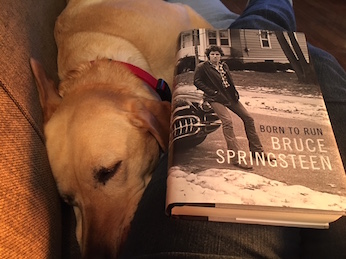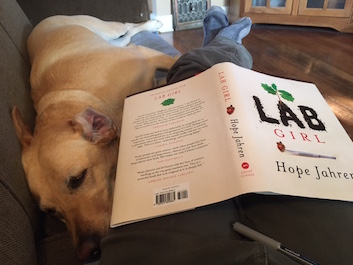

We’ve had Arctic temps here this past week. It’s been about -10F or -23C outside. Ouch! Luckily I’ve worn my trusty big gloves and snow boots, which have worked well on my early morning dog walks. Yes, my dog still wants to go out and chase her ball. Yikes, she’s pretty oblivious to the cold and to me trudging through it after her. Next week, the cold snap should break and it’s supposed to hit 15F, which should feel easy peasy by then. But it’s still a good thing I’ll be in California over Christmas week. I’m looking forward to de-thawing then and visiting with family.
Meanwhile this past week I finished Camilla Gibb’s 2010 novel “The Beauty of Humanity Movement,” which was a read for my book club. It’s my second novel about Vietnam this year, but it’s a bit different than the other one I read — Viet Thanh Nguyen’s novel “The Sympathizer.”
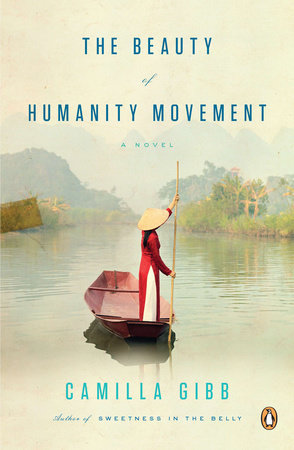
The title of Gibb’s book “The Beauty of Humanity Movement” is a bit of a mouthful, but it refers in the novel to a group of Vietnamese dissident artists who meet during the war at Hung’s cafe in Hanoi and put out a few underground publications before the cafe is shutdown by the Communists and the artists are hauled away to re-education camps.
Now decades later Old Man Hung is a soup vendor, peddling his popular and delicious “pho” on the streets and living by a dirty pond in shantytown. His most faithful pho customer is Tu, who is the grandson of one of the artists, and a tour guide in the city. One day Old Man Hung is visited by a Vietnamese-American woman (Maggie) who is working in Hanoi to catalogue an art collection for the Hotel Metropole. She is searching for clues to her father, a dissident artist who disappeared during the war after she and her mother fled to the U.S. But offhand Hung can’t seem to remember her father, or what happened to him.
The story follows these three intersecting characters as they dig into the past to try to find out more. Tu develops a crush on Maggie and wants to help her, as does Hung who treasured the dissidents and is haunted by what happened to them and his family during the war. He begins to reflect back to those days, and it’s Hung’s life story that makes the novel so compelling. He gives a glimpse into the violent Communist crackdowns, the U.S. bombing raids, and the sheer poverty of the war years, surviving on trees and what little else he could find by the pond. It’s the making of “pho” for his small community that propels him to live — as well as the dissidents’ publications and his love for a girl named Lan. You’ll want to read on to find out what happens.
It’s quite a bittersweet tale, about lost love and changing times, which by the end might make you hungry for a Vietnamese bowl of pho — Old Man Hung’s specialty. I have not eaten pho in a long while, but in honor of the story I’d like to. What I also liked about the novel was how it brought Hanoi’s past and present together. You really get a glimpse of what it’s like there today and what the people in the North went through many decades ago. I think this is the first novel I’ve read set in Hanoi, as opposed to Saigon, so it was new and interesting to me. The city is still a bit of a mystery to many Westerners. I didn’t find the novel a fast read, but I didn’t mind slowly meandering over its pages. The ending seemed a bit too tidily rendered for the main and secondary characters. Still I thought it was definitely a worthy read, which touched on a number of themes, such as the redemptive powers of community, art, and love.
I wondered a bit how the author wrote about Vietnam so well being from Britain and Canada. I hadn’t heard of her before this book, which a member of my book group picked to discuss. But apparently Camilla Gibb has a PhD in social anthropology from Oxford and seems well adept at traveling the world and writing about other cultures. This is her third novel. Her prior one “Sweetness in the Belly” is about a Muslim girl in Ethiopia. I hope to read that one sometime next year.
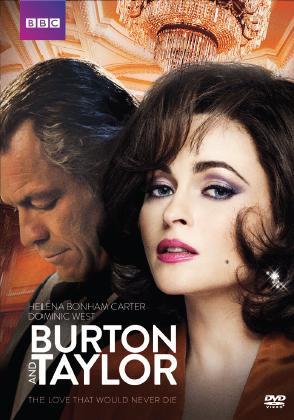
As for movies this week, I didn’t make it out to the theater, but we did rent the 2013 TV movie “Burton and Taylor,” about the last work collaboration between the two legendary actors and former married couple Richard Burton and Elizabeth Taylor. In 1983, they starred in the Noel Coward play, “Private Lives,” together, which is what this movie is about. While making the production, Liz, played by Helena Bonham Carter, comes across as a bratty diva squandering her talents, while Burton, played by Dominic West, seems resigned and conflicted by her. Neither are in good health, or easy much to like. And their relationship is a bit all over the place — with their intense bond and history together eventually pulling them apart. It’s a bit sad really, but an interesting look into their lives. Who knew Burton would die the following year. Till then, apparently he and Liz spoke every few days although they were no longer together. What they shared was quite a connection.
Seeing “Burton and Taylor” made me a bit wistful for their happier “Cleopatra” days.
What about you — have you read Camilla Gibb’s books — or seen this movie? And if so, what did you think?