American Sniper

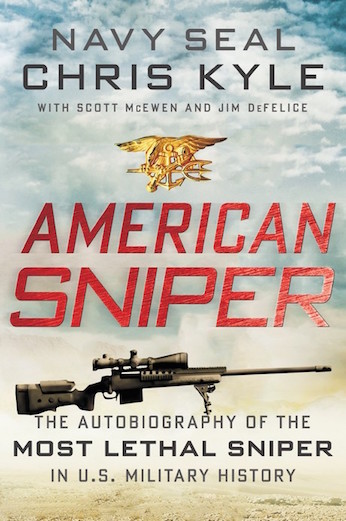
A couple weeks ago before I heard about the hoopla surrounding what right-wing or left-wing people were saying about the movie “American Sniper,” I picked up and read Chris Kyle’s 2012 book of it because I was curious to get a glimpse of the war in Iraq from a Navy SEAL’s first-hand account. My brother had given the book to my husband for Christmas and it was lying around. I didn’t know much about it other than it seemed like a scary-ass war book from its title, the movie trailers, and the fact that Chris Kyle is credited with the most sniper kills in U.S. military history.

Indeed the book is scary and disturbing as war is. I’m sure no one can fully comprehend the reality or horrors of war who haven’t experienced it as our troops have. Chris Kyle’s account is quite blunt and candid. He tells of how he became a Navy SEAL and about his four tours in Iraq from 2003 to 2009. He takes readers along the way through the intense urban combat he experienced in the Iraqi cities of Fallujah, Ramadi, and Sadr City. Mostly Kyle was responsible for sniper overwatches, where he and his team set up in or on top of buildings, protecting Marines or Army troops on the ground by shooting anyone who posed them harm. He also did foot patrols with troops and went door-to-door, weeding out insurgents and weapons caches.

It’s heart-pounding warfare not for the squeamish. Kyle was shooting to kill each time and makes no bones about it in the book. He was doing his job, he says, before the enemy killed him or other troops. He was so good at being a sniper that the insurgents labeled him the “devil of Ramadi” and put a bounty on his head, while U.S troops referred to him as “the Legend.” He placed his priorities in God, country, and family in that order (despite his wife’s disagreement). And his moral clarity about protecting his Team by killing enemies never wavers in the book. He has no regrets about his service other than he couldn’t save more U.S. troops, or trade places with the three U.S. Navy SEALS who lost their lives during his time there.

I’m sure Kyle saved very many lives in the line of fire. He served four tours in Iraq in incredibly dangerous conditions, while at the same time missing out on his family when his kids were babies. I commend him and the troops for their service to the country and Allied mission. He says in the book he wasn’t doing it for the Iraqi people, who he doesn’t seem to put much faith in, but solely for the U.S. He doesn’t go into why we were in Iraq in the first place but simply went where elected officials declared war.

Kyle’s view is definitely a patriotic account but is it, as some say, propaganda? I think he lets readers decide what they will. Quite a few will find the book like I did disturbing in his love of war and killing — how he was concerned with the numbers and in getting the most kills, and how he refers at some points to the Iraqis as savages and details mowing down the “bad guys’” and delighting in their slaughter. It takes a toll just reading about it, much less doing it. Though I’m sure we need tough guys like Kyle to wage our dangerous battles and protect the country.

Apparently the latest edition of the book has been toned down a bit. Though candidly opinionated by Kyle, the book at this point has been vetted by the military, two co-authors, and lawyers alike. Such scenes as in the movie’s trailer that shows a mother and son moving toward the U.S. troops with an RKG grenade was redacted from the book says the movie’s screenwriter. Gone, too, is the subchapter apparently in which Kyle wrote about punching out Jesse Ventura, which Ventura said never happened and in which he won a $1.8 million defamation lawsuit against Kyle.

Despite that, Kyle’s account is informative in bringing insight into how the troops worked in Iraq, into weapons, rank, tactics, what the landscape and war was like, what factions they faced, what SEALS are like, and what they did. The book also highlights how hard deployments are on military families and returning veterans. It shows the war abroad as well as the war at home, where spouses often raise children on their own and vets can’t get the help they need. Kyle’s wife, Taya, writes passages throughout the book about what she’s experiencing and the relations between her and Kyle.

At one point, it seemed the stress of warfare would break their marriage apart, but the book relates how with great effort they held on. By the end, with his wife’s urging, Kyle leaves the war and eventually begins a security company (Craft Intl) and starts helping veterans return to civilian life. The war changed Kyle; it undoubtedly took a toll and affected him. He seems to grow from it by the book’s end. Tragically Chris Kyle was killed in 2013 while helping a vet at a Texas gun range. Now the murder trial of him is all over the news.

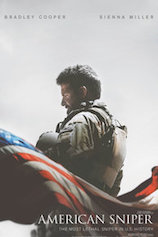
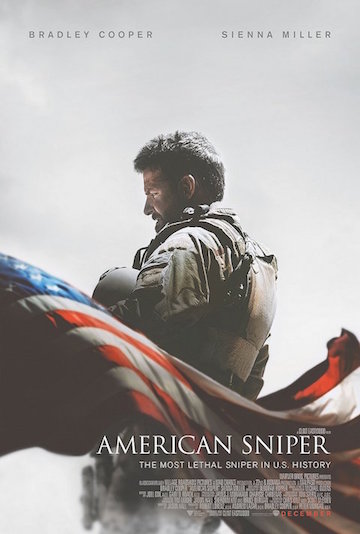
It’s prominent especially because the movie of “American Sniper” has been such an astounding blockbuster. I saw it on Sunday and would never have thought that it would become the top war movie of all time at the box office, nor the top movie of 2014, which it looks like it will be. The movie is effective and moving, rough to watch in parts, and in places powerful, but I wouldn’t pick it as the best war film ever.

It’s drawn controversy no doubt. Those on the right say it’s patriotic, heroic, and highlights the hardships of military families and vets, and also shows the toll the war took on Kyle. While some on the left see the movie as glorifying an unjust war, violence, and a gun culture run amok. Take your pick. I feel it’s more the former than the latter. It’s up for six Academy Awards. I’m still a bit puzzled by the huge success of it when other Iraq war films haven’t fared well.

The film differs from the book quite a bit, notably the movie has the U.S. troops trying to root out a couple of specific Iraqi bad guys, whereas the book describes the clearing out of insurgents in general. Other details differ as well and the script was revised after Kyle was killed. His wife Taya and their marriage troubles figure in both the book and movie. Bradley Cooper who plays Kyle and Sienna Miller who plays Taya excel in their roles. Cooper looks much huskier, and purposely bulked up for the part. I heard about the “fake baby” the filmmakers used in a scene and had to laugh a bit when it came up despite the scene’s seriousness. A rubber baby? C’mon Clint.

The book and movie I’m sure aren’t for everyone. For me I think it’s always informative to know what the country’s military is up to, or what is being asked of our troops, or to reflect on what has been done. I’m curious sometimes to read various perspectives, both military and non-military, about the conflicts in Afghanistan and Iraq, even though they can be a harsh look at human existence. This particular story seems to have its lessons: about sacrifice, about family, and about showing that war is hell and should be the very last resort.

What about you — do you have any interest in seeing the movie or reading the book? And if you have, what did you think?

Posted in Books, Movies | 12 Comments

February Releases

Surely it’s amazing news this week to learn that Harper Lee, the author of the 1960 classic “To Kill a Mockingbird,” had a long-lost second novel stashed away, which was re-discovered and now will be published on July 14. Lee apparently wrote the novel “Go Set a Watchman” in the mid-1950s before she wrote “Mockingbird.” In it, the character Scout, now an adult, returns to Maycomb, Alabama from New York, 20 years after the events in “To Kill a Mockingbird,” and reminisces with her father Atticus Finch.

Of course, some critics are worried that this new novel won’t live up to her classic or will somehow debase it, but I for one welcome it. If Harper Lee is indeed okay with releasing it, which some have questioned because of her health after a 2007 stroke, then I see no harm in it. I’m sure it will be valuable in learning more about Lee’s creative process and how “Mockingbird” came to be. And I’m excited that Scout and Atticus have more to say. I plan to reread “To Kill a Mockingbird” before July so when the new book comes out, I’ll be ready to dive in. As of right now, there’s no book cover for the new book just yet, drats.

Meanwhile I’ve been checking out which February releases I want to delve into. For books, there’s quite a few heavyweight authors with new novels out this month, notably: Anne Tyler, Nick Hornby, Daniel Handler aka Lemony Snicket, and John Boyne. Despite these talented veterans, my book picks for February releases are all from debut novelists. Hard to believe but true.

First off, Tom Cooper’s novel “The Marauders” looks to be a winner. It’s set on the Louisiana bayous after the BP oil spill and chronicles the misadventures of some wacky denizens of a dying fishing village. Stephen King says it’s “rollicking, angry, eye-popping, and fall-on-the-floor funny” and “so damned good you won’t believe it’s a first novel.” O Magazine calls it a “finger-lickin’-good Louisiana swamp noir.” So I might have to wade into its muck … so to speak.

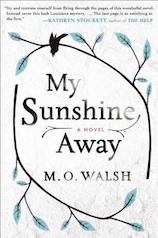
Another new release gaining attention is “My Sunshine Away” by M.O. Walsh. It’s a coming-of-age story set in a quiet Louisiana neighborhood touched by violence. According to Amazon, the narrator was fourteen the year that a crime against the girl he loved changed him irrevocably. Southern authors Kathryn Stockett and Anne Rice are strongly touting this book, with Rice saying “it’s about love, obsession, and pain. Such a beautiful book. … I can’t praise it enough.”

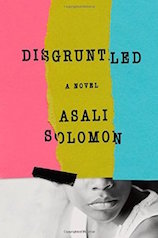
I’m also curious about another coming-of-age novel “Disgruntled” by Asali Solomon. It’s about an African American girl growing up in Philadelphia in the eighties and nineties who’s a perpetual outsider and battles the “shame of being alive.” Stephen Cha of the L.A. Times calls it “entertaining and thought-provoking” and Publisher’s Weekly says the narrator’s “incisive commentary is both arresting and painful.” Perhaps “Disgruntled” is just the book I need to more diversify my reading experiences.

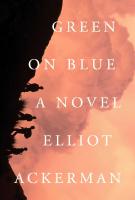
Switching gears, “Green on Blue” by Elliot Ackerman looks to be another unflinching war novel that likely shouldn’t be missed. It’s about two Afghan brothers, Pashtuns, who become orphans and get caught up in the deadly conflict. Author Khaled Hosseini says Ackerman has “spun a morally complex tale of revenge, loyalty, and brotherly love,” while others are touting the author’s enormous empathy. So just when I thought I was done with war novels, I’m being drawn back in.

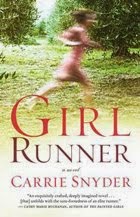
For brighter fare, I’ve been eyeing Carrie Snyder’s novel “Girl Runner,” which came out in Canada in August but is just coming out now in the States. It’s about a former Olympic female athlete from the 1920’s who at age 104 reflects on her childhood and life from a nursing home. It “weaves together the past and present narratives of an uncompromising woman’s life,” says Dani Couture in the Globe and Mail. With a memorable heroine, the novel might just be the perfect escape especially if you’re a runner.

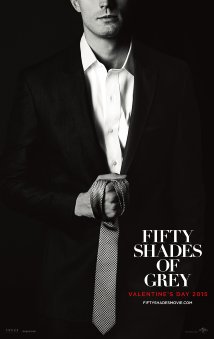
As for February movies, I’ll be skipping over “Fifty Shades of Grey” though I’m sure it’ll make a dent at the box office from fans of E.L. James’s 2011 erotic romance novel. The movie’s being released next weekend in time for Valentine’s Day, weird eh? I didn’t read it so I’m not curious to see how “Christian” and “Anastasia” translate to the big screen. Instead I might catch the *slightly* more (LOL) wholesome Disney production about a true story — “McFarland, USA,” which stars Kevin Costner as a cross-country coach in a small town in California who transforms a team of Hispanic athletes into championship contenders.

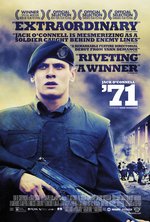
“McFarland” should be half-way decent, but my real pick this month is the action thriller “’71,” which is about a British soldier who is accidentally abandoned by his unit following a riot on the deadly streets of Belfast in 1971. Jack O’Connell, who also starred in “Unbroken,” plays the soldier who’s being pursued by killers of the IRA among others. He’s an actor to watch and this film seems highly suspenseful.

As for albums out this month, I plan to check out “Tomorrow Is My Turn,” the debut solo album by North Carolina singer Rhiannon Giddens. It’s an album full of covers, consisting of songs made famous by Patsy Cline, Odetta, Dolly Parton, and Nina Simone. Giddens has an enticing voice and delivery and is definitely up and coming.

What about you — which books, movies, or albums are you most looking forward to this month?

Posted in Top Picks | 20 Comments

The Jaguar’s Children

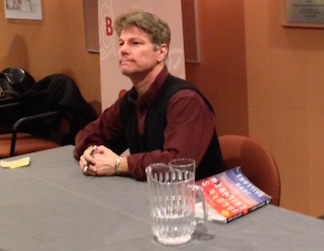
Author John Vaillant is best known for his two nonfiction books “The Golden Spruce: A True Story of Myth, Madness, and Greed” and “The Tiger: A True Story of Vengeance and Survival,” which were both very well received. So when his debut novel “The Jaguar’s Children” recently came out, I snatched it up quickly to read. I was lucky because John Vaillant (pictured above) gave a reading from it here on Jan. 19 where I also heard him give an interesting talk about the writing of the book and he signed my copy. He said the novel came about during the time he and his family were living for a year in 2009 in southwestern Mexico in the state of Oaxaca. And indeed Mexico figures prominently in “The Jaguar’s Children” along with its tangled ties to the U.S.

Specifically, the novel’s about two Mexican guys, friends who get trapped in a sealed water truck along with other illegal immigrants not long after they have crossed the U.S. border. The truck they are in has broken down somewhere amid the desert dirt, and the smugglers, who have taken their money, have not returned with the mechanic they promised. With little food and water, and not much air getting in, the occupants will likely live only a few days inside the truck if they don’t get help. Hector continually tries to leave messages (sound files) at an American number that he finds in his friend Cesar’s phone, hoping they can be rescued. But the cell phone coverage is very spotty and it doesn’t appear the messages are getting through.

Hell, five pages into “The Jaguar’s Children” and I felt clammy hands from their horrific situation. It’s as if you’re in the sealed truck with them where it’s very dark — like being buried alive. I’m very claustrophobic to begin with, even closed elevators make me a bit nervous. Fortunately the story veers off as Hector begins to leave cell messages hopefully to eventually go through at the American number about how he and Cesar came to be there, en route illegally to the U.S. He tells their different back stories that become as big a part of the book as the scenes in the truck, which are intermingled throughout. Hector’s story reveals a truth he comes to learn about his family, whereas Cesar’s uncovers a dark reality about his job researching corn production for the Mexican government.

Each of these tangential stories held my interest to a certain extent, but “The Jaguar’s Children” is not an easy read. While it does a great job depicting its Mexican atmosphere and the terrible struggles within the country, the novel does get confusing at times. Sometimes I had to reread parts just to figure out what was going on or which story was being described. It also uses a considerable amount of Spanish language, often without translation, which left me a bit lost. It took considerable concentration to get through everything in it, and at times I just wanted to cut to the end to find out if the two guys and people get rescued from the truck, but I held back and slowly plowed on.

In the end, I’m glad I stuck with it. It’s quite a rich portrayal of the Mexican experience, and quite dark. It cuts to the humanity really. And if a book can speak well to that then it must be good. Though I had to read “The Jaguar’s Children” quite carefully, it has stayed with me — its bleak depictions and ramifications. As for the guys and other people in the truck, you’ll have to read it to the very end to find out if they survive. I guess I’d give the novel 4 out of 5 stars if I had to rate it on Goodreads. Undoubtedly the author poured so much into it. You can really feel an immersion into the place and culture.

What about you — have you read any of this author’s books and what did you think?

Posted in Books | 8 Comments

Lean In and Wild

Sheryl Sandberg’s nonfiction book “Lean In: Women, Work, and the Will to Lead” came out last March and has stirred up a lot of talk either favorably or unfavorably about it ever since. Some have also seen her TEDTalk titled “Why We Have Too Few Women Leaders,” which she did in 2010. Currently Sandberg, the chief operating officer at Facebook, has a four-part series with co-writer Adam Grant on women at work running in the New York Times. The series continues with views that are in her book.

I picked up and read “Lean In” because my women’s book group chose to discuss it later this month, though I had been curious to read it since it came out. I don’t normally read business or books about employment, but it raises some interesting issues and I’m sure it’ll be a decent book for discussion as everyone has different work experiences and personal lives and views that will touch on things Sandberg brings up in the book.

Her main concern is the dearth of women in top executive or leadership positions at the workplace and that fewer women are aspiring to senior positions. She is upset that highly qualified and educated women are dropping out of the workforce and argues for getting more women in powerful positions by focusing mostly on what women can do to overcome the internal barriers that hold them back.

Yep, women, she maintains, are often holding themselves back from getting the top jobs. I’m sure many aren’t really pleased to hear this from a privileged, rich woman who had very powerful mentors along the way. As if she’s saying, I did it so what’s wrong with you? But generally I liked her book and thought it made many valid points. I didn’t agree with everything in it, but I did think it added to the discussion of working women, and I’m not one to dismiss it just because it looks inward at what women can do better.

In “Lean In,” Sandberg talks among other things about: increasing self-confidence, getting over stereotypes, reaching for opportunities, taking risks, getting mentoring, negotiating more, not worrying about pleasing everyone, applying for promotions, setting goals, and choosing a spouse that will equally share in household chores and childcare. She wants more women to “lean in” to their careers and more men to “lean in” to their families.

Quite a bit of what’s in the book might not be totally groundbreaking, you’ve likely heard these kinds of female business or self-help acumens before, but the book’s also well integrated with personal anecdotes and statistical research. I found both the stats and anecdotes revealing — and I thought quite a few of her tips were good and made me reflect on ways I could do things slightly differently at home or at work.

A few things I think that could’ve been cut from the book or that I would avoid would be: crying at work especially in front of your boss, smiling endlessly when asking for promotions, and asking any prospective employees whether they plan to have children. I guess I wouldn’t feel comfortable with these.

But I do share her premise that a world in which more women held power would be a better place, and I think it’s helpful of her to explore why we aren’t there yet. It’s definitely based on an array of complex reasons (both internal and external). I’d also point out there’s many ways to contribute to society and make an impact, and many ways to lead successful and fulfilling lives. Her corporate way is just one of many. I think she’d argue that women must keep going, reaching for goals and opportunities whatever their path might be and despite fears and obstacles. I found her book was good food for thought.

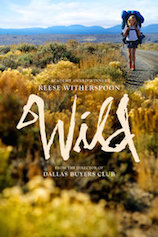
Meanwhile my husband and I saw the movie “Wild” last week, which I think we both liked. Many of those who read Cheryl Strayed’s 2012 memoir won’t be disappointed I think by the film version. It sticks pretty close to the book and enhances it with the beautiful visuals of the landscape and the performances by Reese Witherspoon as Cheryl and Laura Dern as her mother, both of whom have been nominated for Academy Awards for their portrayals.

“Wild” chronicles a young woman’s solo hike along the Pacific Crest Trail from the Mojave Desert to Washington State undertaken after the death of her mother and the end of her marriage. On the journey she finds solace and begins to heal.

I’m a sucker for such hiking/journey-types of finding oneself stories, and while I liked but didn’t love the “Wild” book, I was moved by seeing her journey on film. During Cheryl’s trek, there’s various flashbacks to her childhood with her brother and her single mother and also flashbacks of the downward spiral her life took in her late twenties. You feel her anguish and grief and also her healing as she moves forward. It’s a quiet film that captures her strenuous hike and internal struggles. It reminded me a bit of the 2010 film “The Way” with Martin Sheen, which similarly involves a long hike and the grieving process.

What about you have you read “Lean In” or seen the film “Wild” and what did you think?

Posted in Books, Movies | 22 Comments

January Releases

It’s been a sad, sobering week after the news coming out of France. I stand in solidarity with the people and cartoonists of Paris after the horrific attacks. Vive la liberté and freedom of speech and the press.

Meanwhile I’ve been looking over what new releases are coming out this month and have picked three novels that are in my crosshairs so to speak and that I hope will be good.

The first is Canadian Michael Crummey’s novel “Sweetland,” which came out in Canada in August and is coming out now in the States. I’ve heard it characterized as a quiet, mournful novel about a dying island community in Newfoundland and one man’s determination to try to save it. I want to read it especially since it’s apparently from one of Canada’s strongest novelists writing these days, and I live here now. So bring on more CanLit for me in 2015.

Also John Vaillant, a U.S.-born-but-living-in-Vancouver, B.C. author, has his highly anticipated debut novel coming out this month called “The Jaguar’s Children.” It’s a survival story about a young man trapped in a truck packed with other illegal immigrants and abandoned during a border crossing. I’m interested to read it after Valliant wrote the popular nonfiction book “The Tiger” in 2010. He’s also doing a book reading and signing of “The Jaguar’s Children” in my town on Jan. 19 so I plan to go. The book’s supposed to be gripping and the narrative tension-filled. So we will see.

Lastly in books for January, I’m curious about Stewart O’Nan’s latest novel “West of Sunset” about F. Scott Fitzgerald’s troubled last years in Hollywood. I’m usually very leery of novels about real literary or famous figures from history, but Fitzgerald is one author whose books I’ve admired and someone I’d like to hear more about. Though readers on Amazon seem to be all over the map on whether “West of Sunset” is any good. Some say the novel’s “lifeless” and others say it’s “heartbreaking and beautiful.” Hmm, so which is it? And does O’Nan really mistakenly refer to the San Gabriel mountains as the Sierras within the book? One Amazon reader noted this in her critique. I remain interested in it and will just have to find out for myself.

Meanwhile in film releases this month, plenty of notable ones are coming out. Of course, there’s “Selma,” “American Sniper,” and “Still Alice” — all of which I hope to see. I know considerable controversy is swirling around the movie “Selma” as various sources are saying its portrayal of President Lyndon Johnson’s actions and relations toward Martin Luther King are erroneous. Also MLK’s estate did not give permission to use King’s exact speeches (apparently Spielberg is using those for another project) so the speeches were re-written for the film. Despite these discrepancies, I’m still interested in seeing the film “Selma,” which is a place I visited once many years ago.

For albums out in January, I’m interested to check out those by Justin Townes Earle, Ryan Bingham, and the indie folk group The Decemberists. I’ll choose The Decemberists’ “What a Terrible World, What a Beautiful World” for my pick this month — as the Portland, Oregon group had much success with its 2011 album “The King Is Dead” so I’ll be curious about the follow-up.

What about you — which books, movies, or albums are you most looking forward to this month?

Posted in Top Picks | 14 Comments

The Enchanted and Unbroken

So the first book I read for 2015 … drumroll please … was “The Enchanted” by Rene Denfeld, which came out in March 2014. It left quite an impression on me and would’ve been my pick for best novel of 2014 if I had read it just a few weeks back. It’s very dark and brutal in some places but beautifully written and very well done.

How to explain it? The novel takes place at an old stone prison where some of the inmates wait on death row. There’s a warden, a priest, and a lady investigator who visits trying to discover buried information about her clients’ pasts to save the soon-to-be executed. One part of the story is about her life and a case she is working on to save a prisoner named York. He doesn’t want to be saved though, but she pursues it, revealing some ugly truths about his past (and her own) while investigating in his hometown.

The other part of the story is about what goes on at the prison as told through the eyes of a reclusive death row inmate. All the awful things you hear about in prison and among inmates manifests themselves in the story in brutal ways. To escape his situation, the inmate disappears in his books and re-imagines the prison as an enchanted place where fantastical creatures rome. He’s fearful, living in his cell with covers over his head, but he’s able to sense what others cannot.

“The Enchanted” is an unusual and unsparing story about life on death row. It’s not too political (there’s characters in it on both sides), it’s not sentimental (definitely not Disney), it’s not forcing something down your throat, but rather by the end it gets to something of what it is to be human — both the violent and the good. You sense the humanity of those involved.

I can’t say I really realized what this book would entail when I picked it up. It’s quite harsh, so be forewarned. It’s not a light, feel-good book. It’s about the exact opposite of my last read “The Storied Life of A.J. Fikry,” which I found too sentimental. This one is not anything like that. Normally I would not pick up a novel about a death row prison, but I’m very glad I did. Despite its darkness, I was taken by the beauty of the book — the author’s descriptions — and how well it is done — exploring such themes of the human condition. It pretty much blew me away.

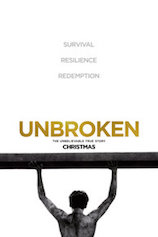
Speaking of humanity, I did see the film “Unbroken” the other night, and while I did think the film was good in various respects, I’m sorry to say it didn’t fully capture the essence of Laura Hillenbrand’s book about Louis Zamperini’s incredible life story. Notably it misses quite a bit of the context of the history in her book, and what life was like for servicemen in the Pacific theater during WWII. It also misses Louis’s formative post-war years completely by just putting a postscript at the end of the film.

I liked the early parts of “Unbroken” best of Louie running, and the flying scenes of the WWII bomber plane. The scenes on the raft were also vivid and Jack O’Connell does quite a reputable job as Louis Zamperini. But the brutal scenes once Louie gets captured and sent to the Japanese POW camp take a toll. As my nephew said: the film felt like a long series of really bad stuff occurring to one person. And for me: who wants to watch a movie of two hours of torture? Without more historical context of the collective war experience, and Louie’s redemption later in life, the film misses out on being a lot more. I think Hillenbrand would stress that Louis Zamperini was just one among hundreds of thousands of Allied servicemen who sacrificed and was a hero during WWII. Through her book, we get to learn a little bit more about their service in the Pacific theater.

What about you — have you read (or plan to read) “The Enchanted” or have you seen (or plan to see) the film “Unbroken” — and what did you think?

Posted in Books, Movies | 4 Comments

Still Alice, A.J. Fikry, & Imitation Game

I haven’t posted lately as I have been busy with all things related to Christmas, but my husband and I had a lovely week at the beach in California visiting my folks. Now we are back to the snow in Canada, wondering how the vacation went by so quickly. It’s the last day of the year, so I want to wish everybody a very Happy New Year! I’m sure like many of you I’ll be setting new reading goals in 2015, such as mixing in more nonfiction and maybe classics and upping the number of books that I hope to read. I also want to review a book from each month that’s just come out, thereby staying more current and topical. Meanwhile I have a few mini-reviews of books and a movie I saw on break.

The first is Lisa Genova’s 2007 debut novel “Still Alice,” which I wanted to read as it is coming out as a movie with Julianne Moore and Alec Baldwin on Jan. 16. Much buzz has been talked about of Moore’s performance and whether it’ll be award-winning, so I was game for the book. Granted, it’s a bit of an odd choice at Christmas break, reading a story about a successful female professor at Harvard who gets diagnosed at 50 with early-onset Alzheimer’s disease. It’s quite sad sort of like all the plane crash news of AirAsia on TV this past week. How much can one take that’s depressing?

Yet “Still Alice” doesn’t bog down in overly sentimental, emotional gush. It tracks Alice’s diagnosis and what happens to her professional and family life as a happily married working woman with three grown children. As the disease progresses, the bonds of the family are tested, as well as Alice’s own identity of who she is if not the brilliant professor she once was. The novel’s a compelling quick read and is informative about the disease and its genetic link and testing. I flew through it, wanting to hear more of Alice even though her prognosis isn’t good. Also having the book told from Alice’s point of view, as she struggles through, definitely makes it more unique from other Alzheimer’s stories I’ve read, which are often told from the caretakers point of view. It adds more value and understanding to her situation too.

I liked “Still Alice” though there were a couple times that strained my believability, particularly the part where Alice shows up to teach the next semester without having told the university what’s happening despite the disease’s evident progression. She’s in denial all right, but she should have just told them and taken a leave instead of having to be confronted by the department head. Still it’s a moving book about a terrible disease that’s touched so many people’s lives. I’ll be curious to see the movie.

I also liked Gabrielle Zevin’s “The Storied Life of A.J. Fikry,” which has been quite popular this year. It’s a novel about a grumpy bookstore owner and widower on an island in New England whose life becomes transformed after a two-year-old baby is left abandoned at his store. Most of it takes place at the bookstore and captures a bit of the magic of books and bookselling so I was eager to read it having worked during my younger years in indie bookstores.

The novel starts strong and I immediately thought I was going to love it. There’s both humor and heart to it, and the first encounter between A.J. and the book sales rep Amelia is a funny exchange. The story also has a bit of intrigue when A.J.’s rare book of Poe’s poetry is stolen and the child is left at the store. The island clientele also makes for fun characters and a good book community.

“The Storied Life of A.J. Fikry” seems to have all the right ingredients but then somewhere along the way it becomes too sentimental and I couldn’t shake it for the rest of the book. Just seems a bit sweetened. So I liked it but didn’t end up loving it. Drat. I also thought it would delve more into books than it actually does. Oh the stories I could tell about the bookstores I ended up at.

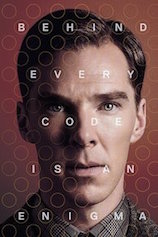
Last but not least, “The Imitation Game” is a movie I would highly recommend. The history behind the breaking of Germany’s Enigma Code during WWII is fascinating, and it stars Benedict Cumberbatch as Alan Turing, the real life mathematician who helped solve the code. What more do you want? It’s a race against time during the war, and not only do the code-breakers have to crack the code against a machine considered unbreakable, but once they do then they can’t let the Germans suspect they solved it. The film’s great and also involves the sad fate of what happened to Alan Turing after the war (no spoilers here). So far the film’s my favorite going into award season, but I still have plenty of others to see, so stay tuned.

What about you – have you read or seen any of these or do you plan to? And what did you think?

Posted in Books, Movies | 29 Comments

Unbroken

I’m ready for the movie adaptation of “Unbroken” — at least I think I am — I just finished the 2010 bestselling book by Laura Hillenbrand. It’s incredibly powerful for sure, and one of the most epic war survival tales I’ve ever read — though I’m sure there are many grueling accounts I haven’t gotten to. Just this year, I read Eric Lomax’s book “The Railway Man,” which is another chilling account of life in a WWII prisoner-of-war camp. And a few years ago, I read David Howarth’s epic true story “We Die Alone” about a Norwegian resistance fighter who somehow survives a Nazi ambush and escapes to an arctic village. Check those out if you’re feeling brave, or if you want to read two other incredible World War II survival stories.

I think I’m nearly the last person on Earth to have read “Unbroken: A World War II Story of Survival, Resilience, and Redemption.” It sat on my shelf for four years, collecting dust, but I knew I’d get to it. I’d heard all the amazing things about it, and in the end, it lived up to it all. For being nonfiction, “Unbroken” is not a dense or heavy read. It’s a quick page-turner, and I plowed through it with zest, careful not to miss a word. I wanted to get to the bottom of Louis Zamperini’s fascinating life, and Laura Hillenbrand’s flowing narrative and amazing research perfectly led the way. Not only does Hillenbrand’s book lend insight into Louis’s own life, but it also captures what the war was like for so many servicemen in the Pacific, especially in the air battles.

Even without the war part, it’s incredible that Louis Zamperini, who apparently was a total hellion as a kid growing up in the 1920s and ’30s in Torrence, California, became an Olympic miler in the 1936 games, qualifying at only 19. He was expected to be the first ever to break the four-minute mile, but then WWII broke out and he enlisted.

“Unbroken” recounts Louis Zamperini’s service as a bombardier on a B-24 bomber, which eventually was shot down by the Japanese while on a mission over the Pacific. He miraculously survived 47 days lost at sea on a raft with the plane’s pilot before being picked up by the Japanese and transferred to a prisoner-of-war camp. There, he was tortured and endured the wrath of one particularly sadistic guard nicknamed “The Bird.”

Ugh, The Bird is really difficult to handle in this book, and some of the violent and brutal parts inflicted on the prisoners by him are hard to read. The starvation and humiliation, as well, is stuff you can’t fathom. The POWs suffered through so much, it’s harrowing to imagine. I felt very vengeful toward The Bird and hoped he would be brought to justice after the war, but it doesn’t appear that’s what happened.

The book’s ending deals with life after the war for Zamperini and a few other POWs. Louis marries and becomes a devout Christian after hearing the sermons of Billy Graham, which ends up turning Louis’s alcoholic life around. Eventually he returns for a visit to Japan, forgives his captors, and is chosen as one of the carriers of the Olympic torch in Japan for the 1998 Nagano Games.

It’s quite an emotional ending, though the post-war years of the book feel a bit more rushed and seem perhaps not as thorough or as deep as what happens to Louis during the war. I’m sure I probably gave away too much of the synopsis of the book, but even knowing that, it doesn’t do justice to reading the story. You might know that “Unbroken” is about a prisoner-of-war’s experiences during WWII, but until you read the Hillenbrand book, you won’t really get the gist of how remarkable the story really is. I’m sure it is one of my favorite reads of the year. I plan to see the movie, but I know it might not have the same impact as the book, which I seemed to have lived through in my head, rooting for Louis to survive over all the intolerable hardships.

What about you — do you plan to see the movie? And did you read the book first — and what did you think?

Posted in Books | 13 Comments

Birdman and The Walking Dead

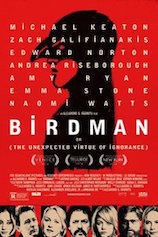
Wow the movie “Birdman” is sure a clever, little black comedy of a film, which seems a shoe-in this award season. It’s about a washed-up superhero movie actor (played by Michael Keaton) who’s trying for a comeback by mounting a Broadway play based on a Raymond Carver story. Of course Michael Keaton starred as Batman twice way back when and hasn’t been in much notable of late, but this movie’s not his own true story. It’s just a great back story.

“Birdman” takes place almost all within the building of a New York City playhouse where Keaton’s character Riggan is trying to get his play up and running, but everything seems to be going wrong. He’s got family problems with his ex-wife and daughter (played by Emma Stone); staging problems with an egotistical, pretentious actor (played by Edward Norton); financial problems trying to fund it; problems with his possibly pregnant girlfriend who’s an actress in the play; and problems with a theater critic who says she’ll pan the production. The man’s in crisis. On top of all this, he keeps hearing the voice of his alter-ego, the Birdman, the superhero he once played, who keeps trying to lure him back to star in the action franchise again despite his advanced age.

The performances are all excellent, especially Edward Norton who seems to steal the movie at times as the jerk-of-a-guy actor. Emma Stone is terrific, too, as the depressed rehabbed daughter, and Naomi Watts who’s the ingenue in the play is top-notch as usual. And then there’s Keaton himself who brings a realness to the role that makes you almost believe it’s his own true story. Manhattan, too, is featured prominently and the film exudes a whole New York vibe, which people who like films set there will truly like.

I found the film darkly funny and clever. (It’s not for kiddies though there’s lots of bad language and inside jokes that they might not relate to.) Among other things, the movie spoofs fun at fame, acting, social media, and critics in dialogue you won’t want to miss. Much, too, has been talked about how the film appears to be done in one long take, the scenes flowing into each other as if there’s no edits. Apparently the filmmakers pulled this off digitally, but also the actors had to keep their scenes rolling for long periods. Visually it’s cool and adds to the realness of the play’s backstage shenanigans.

Whether the play will take off on opening night, you won’t know till the film’s end, which turns out to be quite a doozy. As for Keaton’s character, it’s left to one’s own interpretation what happens to him. Although I didn’t know what to expect going into see “Birdman,” I’ve liked it quite a bit more afterwards, with time and thought.

What about you— have you seen this movie or do you plan to? And what did you think?

In other news this week, I’ve continued reading Laura Hillenbrand’s nonfiction book “Unbroken” and watched the midseason finale of Season Five of “The Walking Dead,” which ends with quite a showdown at the hospital in downtown Atlanta where Beth was being held. Of course, I knew one of the main characters would likely die, but I was rather bummed with who ended up getting killed off. It definitely will take a toll on the group as they move forward. But what is next for them? And where will they go in the second half of Season Five? And who will be the main focus? I guess we won’t know for sure till February when the TV series starts up again.

Have you been following the show? What do you think so far of Season Five?

Posted in Movies, TV | 12 Comments

December Preview and Life Drawing

Yikes winter hit hard here on Black Friday, with -6F temps and a wind chill of -27F. By the evening it was a full-on blizzard with a heavy dumping of snow. Now the storm seems to have passed, but it’s still bitter out there and best to stay inside, gazing out the window next to the fire place sipping hot cocoa. Yesterday between wearing a neck gaiter, two hats and goggles, I was able to cover my face while walking the dog in the park, which worked quite well. Only the times I had to take my gloves off for moments, did I freeze. After this, I feel like with the right equipment I could be ready for Mars.

But it’s too late now to moan, December is upon us. And pretty soon everyone will be putting their Best of Book Lists out for 2014. Already Amazon’s editors’ book picks for 2014 seem quite interesting. For the best book of the year, the editors there picked Celeste Ng’s debut novel “Everything I Never Told You,” which is about a Chinese-American family living in Ohio whose oldest daughter is found to have drowned in a nearby lake, thereby unraveling the once close-knit family in unexpected ways, according to Booklist. The novel came out this past June, and I definitely plan to pick it up in the near future. Have you read it?

Also I failed to mention last week a congrats to Phil Klay for winning this year’s National Book Award for fiction for his collection “Redeployment,” which includes twelve stories about the Iraq War and its aftermath. War novels about Iraq and Afghanistan surely have gained considerable attention the past few years with the publication of Ben Fountain’s book “Billy Lynn’s Long Halftime Walk” and Kevin Powers’s “The Yellow Birds.” However after all the talk about “The Yellow Birds” in 2012, I can’t say I liked that book much, which disappointed me. And while I’m not a big reader of war writing, I’ll likely pick up “Redeployment” by Phil Klay, who served as a Marine in Iraq from 2007-2008.

As for new December releases, there’s not a lot of literary fiction coming out this month. Of those that are, perhaps “The Boston Girl” by Anita Diamant might entice me most. According to Amazon, it’s about the ties of family, friendship and feminism through the eyes of a young Jewish woman growing up in Boston in the early 20th century. I quite liked Diamant’s 1997 bestselling first novel “The Red Tent” so I think this one could be interesting as well.

As for movies out this month, I plan to see “Wild” with Reese Witherspoon, which is the movie adaptation of Cheryl Strayed’s 2012 book “Wild: From Lost to Found on the Pacific Crest Trail.” I read and reviewed that book that year, and while I liked it, I also had a good share of reservations about it, too. Still I’m curious to see what Reese will do with the role.

I also plan to see “Unbroken” towards the end of the month about Louis Zamperini’s prisoner-of-war experiences during WWII. Angelina Jolie directs this epic, which I hope will live up to some of the popularity of Laura Hillenbrand’s 2010 bestselling book. But first I plan to read it before seeing the movie on the big screen.

In music this month, I’m sure I’ll be listening to a lot of Christmas songs as the month goes on. But for new releases, I’ll pick the covers album “Classics” by the duo She & Him to check out.

In other news, I finished Robin Black’s 2014 novel “Life Drawing” this week, which is about a middle-aged married couple (a painter and a writer) who move to the country to do their work and to heal after the wife’s infidelity. Yet ultimately their lives are disrupted in various ways by a British divorcee and her daughter who move in next door. At first the couple really takes to them but then things become entangled and confidences breached, causing a fall out for all.

The plot is quite interesting in its exploration of the couple’s marriage, which is weighted down by the past infidelity, and the secrets they keep and the confidences they share with others, as well as their many layers. I just wish the novel hadn’t saved much of its action till the final few pages. It seems to very subtly build and build and build and I began to wonder if anything was ever going to happen in the book, though I did keep reading to find out. But much of the book seems quite serious and grim, a chronicle of the artistic couple’s working lives together, which seems rather joyless. I couldn’t bond much with the wife who tells the story. Yet the setting of the country house and barn, the neighbor next door, and the married couple’s tension-filled lives came off quite vividly to me.

So I guess I feel half and half about “Life Drawing.” I’d say it’s a quiet book with a big ending. It explores some interesting themes. I liked it but maybe not effusively so.

What about you have you read this one and what did you think? If not, what releases are you looking forward to in December?

Posted in Books, Top Picks | 6 Comments