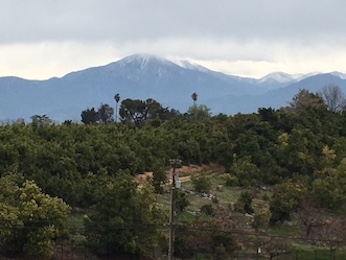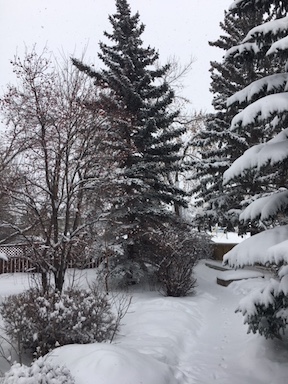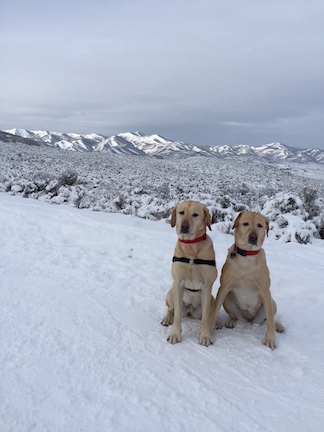
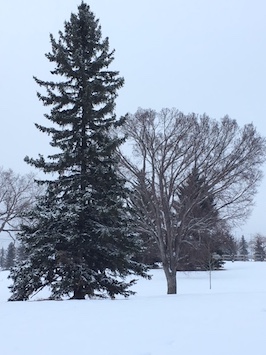
We had light snowflakes fall all yesterday if you can believe it and my yard is still covered from earlier in the winter. It seems the season is just a little mixed up right now — why does it keep snowing? — but still I keep thinking spring is right around the corner, or at least I hope so.
In book news, I’m sorry once again to be missing the L.A. Times Festival of Books, which I always want to attend but never seem to make. It takes place April 21-22 in Los Angeles, if you’re in the area, and features a vast array of authors and discussions. I will also be missing BookExpo America this year, which runs May 30 to June 1 in NYC. Still I have a steady pile of books already to read so it’s probably okay that I won’t be there to acquire another pile. Will you be going to either of these, or any other book festivals this spring? Unfortunately I will not, but in the meantime, I will leave you with a few brief reviews of what I finished lately.
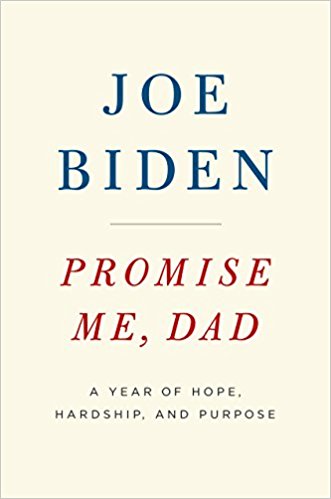
Joe Biden’s 2017 memoir “Promise Me, Dad: A Year of Hope, Hardship, and Purpose” was a book that was lying around my parents’ house when I visited them recently. It had been a Christmas gift to my dad, and I snatched it up realizing it’d be a fast read. The memoir chronicles a year in the life of the former vice president starting from Thanksgiving 2014, when his eldest son (Beau) was being treated for a malignant brain tumor and his survival was uncertain. The illness was kept secret for most of the time at his son’s request.
While dealing with that, Biden was also working full tilt as VP, which he writes about, attending to crises in Ukraine, Iraq and Central America, and going to such funerals as those for the two police officers fatally shot in NYC and the victims of the Charleston church shooting. He purposely sought to remain busy (so as not to fall apart), on top of being there for his son’s procedures at the Anderson Cancer Center in Houston.
The personal parts about his family’s dilemma regarding Beau’s health and his fight against cancer are quite moving and emotional in the book, and his insights into his work as VP are also interesting. He comes off as quite sincere, down to earth, and devoted to his incredibly close family and his life’s work in government and elective office, giving his personal phone number, for example, to a grieving father whose son was killed to call him if he needs someone to talk to. Other parts of the book in which he recounts his accomplishments and expertise were less enticing to read: as if he were saying on a number of occasions look at all the things I’ve done, which came off rather PR-ish.
Once Beau passes (in May 2015 at age 46), the memoir veers into handling the grief and the VP’s agonizing decision whether to run for the presidency in 2016, which his son wanted him to do. He had various people working on his bid for it, and seemed well situated, he writes, but then right at the last moment he decides not to run, saying he wasn’t fully committed after the death of his son.
His whole lead up in the book and emphasis on running for the 2016 presidency — made me wonder a lot about what would have happened if he had run? I didn’t realize he was so close to it at time. Would he have won? I guess I now bemoan the fact that he didn’t run, even though I wasn’t really focused on him as a candidate at the time (he’d be better than who’s in there now, right?). It seems the book sort of leaves open the door perhaps for him to run in 2020. Hmm. Did he mean it to be?
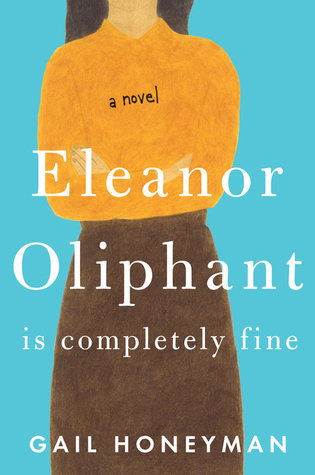
Next up, I read Scottish author Gail Honeyman’s 2017 bestselling novel “Eleanor Oliphant Is Completely Fine.” Am I the last one to read it? Honestly I didn’t know a thing about it before I started it … other than it was very popular, and in the end — I must say — I found it entertaining and moving and I thoroughly enjoyed it. Sure, some people are going to pooh-pooh it because it’s now apparently considered part of a genre known as “up lit,” which includes such novels as Rachel Joyce’s “The Unlikely Pilgrimage of Harold Fry,” Graeme Simsion’s “The Rosie Project,” and Jojo Moyes’s “Me Before You.” Okay so I’ve read all those and am a bit of a sucker for stories with heart. “Kick me” is likely written on my back.
But what the heck is “up lit”? Apparently according to the Guardian newspaper, it took off a couple years ago and includes novels about kindness, compassion and maybe even communities coming together. As author Rachel Joyce explains: “It’s about facing devastation, cruelty, hardship and loneliness and then saying: ‘But there is still this.’ Kindness isn’t just giving somebody something when you have everything. Kindness is having nothing and then holding out your hand.”
Holy smokes, what did I know, but perhaps it sounds a bit goofier than it really is. As for Eleanor Oliphant, it’s a story about a 30-year-old, anti-social, lonely girl in Glasgow, Scotland, whose chance friendship with a new IT guy at work (Raymond) and an elderly collapsed man they assist from the street to a hospital (Sammy) — help her confront the demons of her past. The story is both funny and quite dark too. The poor girl has had a seriously rough childhood, went through the foster care system, and is left with a scar across one side of her face. She goes home after each workweek not talking to a soul from Friday to Monday except her plant, Polly, and a bottle of vodka. (Though is there anything wrong with that? just saying …) Yet these two blokes end up, in lovely ways, bringing her out of her shell.
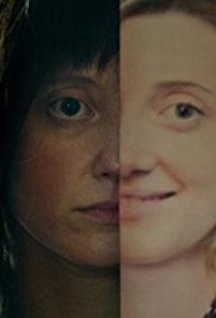
Apparently the author created the story after reading an article about loneliness on young people. Gail Honeyman is no slouch as a debut author and executes the story in masterful ways. The novel has been longlisted for the Women’s Prize for Fiction and Reese Witherspoon’s company apparently has bought the film rights. Now which actress would make a good Eleanor Oliphant? It has to be a 30-year-old-ish girl, lost, damaged, clueless but smart, direct with no filters in what she says, and with a slim chance of being saved. Hmm I’m drawing a bit of a blank at the moment but perhaps Evan Rachel Wood might suffice or maybe one of the Olsen twins. Who’s your pick?
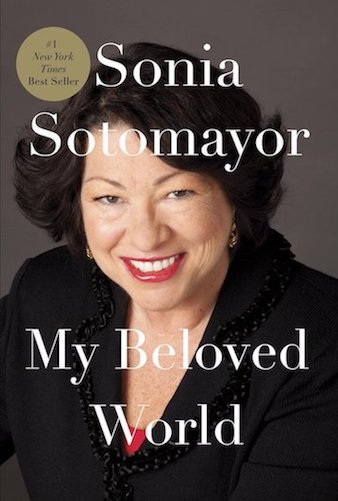
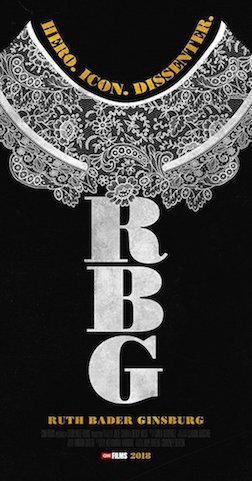
Last up, I listened to the audiobook of Supreme Court Judge Sonia Sotomayor’s 2013 memoir “My Beloved World,” which I had always been curious about. I recently seem to have gotten into the justices’ stories after watching the documentary of “RBG” (Ruth Bader Ginsburg) at the Sundance film festival. These women on the court are like astronauts, are they not? They start from humble beginnings yet accomplish so much.
Sotomayor’s memoir focuses quite a bit on her youth — as a Puerto Rican American who found out quite early on that she had Type 1 diabetes and would need to give herself insulin shots for the rest of her life. She grew up in a housing project in the Bronx part of NYC with a younger brother. Her father was an alcoholic who died when she was 9 and her mother, who was distant to her during those years, worked as a nurse. It was her grandmother who she spent time with her who gave her love and support and Sonia excelled at school, graduating valedictorian of her Catholic high school.
It’s quite an incredible story how she went on to a full scholarship at Princeton (graduating in 1976) and then Yale Law School (1979) and to her life as a lawyer and then judge. I found her telling to be quite earnest and straightforward chronologically and her life to be marked by a great degree of self-reliance, hard work, integrity, and determination. She was often in situations she knew nothing about and would have to learn about them from scratch to succeed. Time and again, she would rise to the challenge.
I liked hearing about the personal side of her life and family life — how she came to marry her childhood sweetheart and why that marriage didn’t work out; her relations with her mother; and the closeness of her cousin and grandmother and the pain of eventually losing them. But there were other parts (maybe the law and career parts) that I thought were a bit too dry and methodical. (Perhaps it might have been more interesting if I were a lawyer.) Some of it read like a tale from a life of self-improvement.
So while I didn’t find it the most thrilling of memoirs (it stops before her Supreme Court nomination), I still was impressed by what she was able to accomplish and her integrity and work ethic. I now realize that her life was shaped a good deal by her diabetes and her Puerto Rican heritage. It made me wonder what she thought of the recovery efforts in the aftermath of Hurricane Maria on Puerto Rico. Yikes.
What about you … have you read any of these and if so, what did you think?