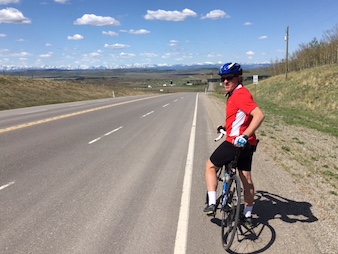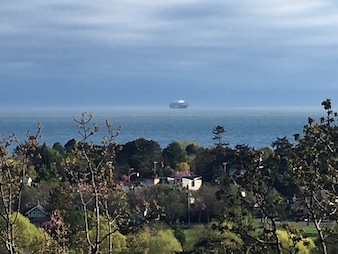

Greetings. We had nice weather for our annual May long weekend bicycle trip in the mountains. We survived and happily no one on the organized ride (of about 300 cyclists) got hurt that we heard about, although it was a bit uncomfortable at certain narrow points riding along the shoulder of the road with cars and trucks whizzing past, but unfortunately that’s par for the course with sharing the road.
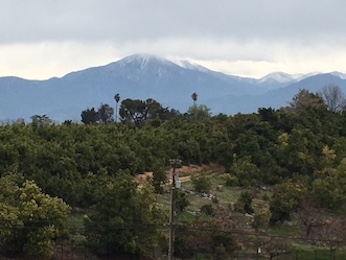
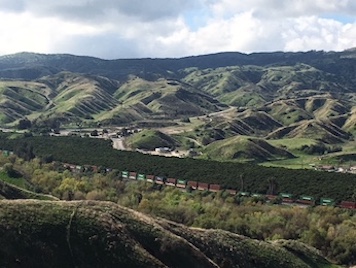
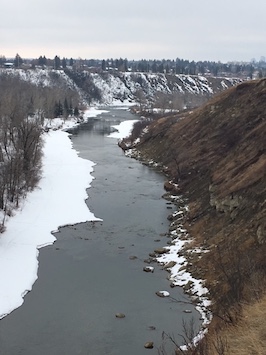
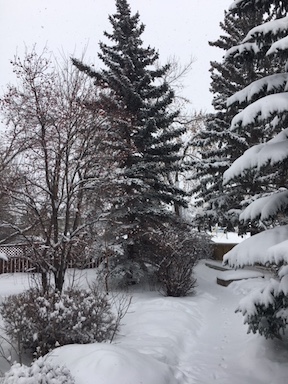
The mountain peaks were pretty spectacular as you can see from the photos and we saw a moose and two mountain goats along the way, which I did not have my camera ready for. Apparently we had just missed seeing a mama bear and her two cubs by the side of the road eating dandelions.

It feels like summer is here now with the long weekend behind us, although that won’t officially happen for several more weeks. Still the temps have hit the 70s and 80s, and I have planted my annual crop of tomato and cucumber plants — woo-hoo — as well as petunias and geraniums. For those in the States, I wish everyone a very happy and long Memorial Day weekend. Wherever you are, enjoy your reading.
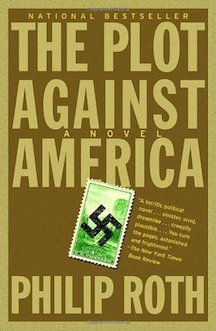
In book news — there’s been two literary icons who’ve passed away recently First Tom Wolfe and now Philip Roth. It seems sad to lose such giants. The New York Times’s obituary hailed Roth as a “towering novelist who explored lust, Jewish life, and America.” Many viewed him as America’s greatest living writer, he was 85. And Wolfe, who died a couple weeks ago at 88, was known for turning journalism into enduring lit and for his satire. I remember reading Wolfe’s “The Bonfire of the Vanities” from 1987 and “The Right Stuff” from 1979.
Yet despite the lengthy career of Roth’s, I somehow missed reading his novels, which I hope to rectify later this year. In honor of Roth’s and Wolfe’s works, I’ll go ahead and plan to read one book from each author in 2018, and perhaps I’ll throw in an Ursula Le Guin novel as well — as the renown sci-fi / fantasy author passed away in January. Which are your favorites from these authors that you’d recommend? Hmm. In the meantime, I’ll leave you with a couple of reviews of what I finished lately.
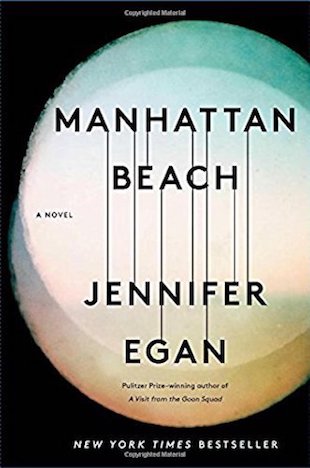
Oh yes, I knew I’d eventually get to Jennifer Egan’s 2017 historical novel “Manhattan Beach,” which many critics hailed and many bloggers disdained. What gives? I had to find out. I listened to it as an audiobook which took me a couple weeks and many miles of walking to complete as it is quite long and epic but well narrated. I was coming into it as a newbie to Egan’s fiction, so I didn’t have any preconceived ideas about any of her prior novels such as her prize-winning tale “A Visit From the Goon Squad,” which might have worked in my favor — as this one is much more traditional in its scope and apparently a world apart from that one.
Early on, I was able to get into the story that takes place in NYC in the 1930s and 40s … about a family — 11-year-old Anna and her disabled sister, Lydia, and her mother, and father, Eddie, who comes to work for nightclub owner and mobster Dexter Styles, whom he takes Anna to meet as a child. But then Eddie vanishes from their lives, leaving Anna and her mother to scrape by to make ends meet while taking care of Lydia.
Fast forward years later, and Anna, now 19, is working at the Brooklyn Naval Yard, where eventually she becomes the first female diver repairing U.S. ships for the war effort — when she meets up with Dexter Styles again, which leads to an intriguing rendezvous as she tries to figure out what happened to her father.
The narratives of Anna, her father Eddie, and club owner Dexter Styles alternate throughout the novel and make for a fairly interesting ride into their intertwined and multi-faceted lives. There’s some rich historical detail amid the story and some enticing storytelling that conjure up quite well the underworld dealings, dock life, nightclubs, gender roles and attire of the era and feel of New York around the time of WWII. I especially found the part of Anna and Dexter taking disabled Lydia to the beach in his car — as well as the scene with Anna and Dexter making a dive with full gear on to the bottom of the bay quite vivid.
All in all many images from “Manhattan Beach” stayed with me and I liked its redemptive themes, many water scenes, and Anna’s perseverance. My only problem with the story was that it was quite drawn out and slow in places where I felt it didn’t need to be. I wanted to cut about 75 pages out of it — to speed it up a bit. I wasn’t a big fan of Eddie’s narrative parts but wished Dexter Styles had had a longer role or more narrative. I also felt when I got to the end it felt a bit anticlimactic to me — a lot does happen but perhaps it was just how it all came together. So while I liked it quite a bit, I did have a few caveats about it.
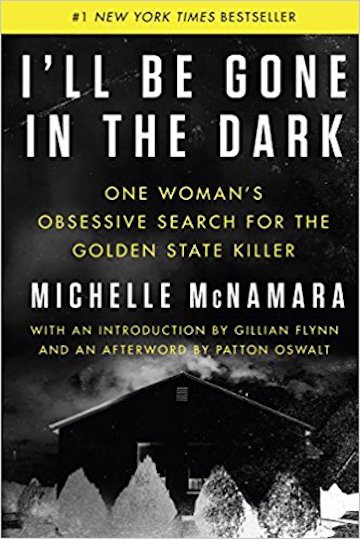
Next up I finished Michelle McNamara’s nonfiction book “I’ll Be Gone in the Dark: One Woman’s Obsessive Search for the Golden State Killer,” which seems to be a big bestseller this year and was completed by the author’s husband and various editors and writers after the author died tragically before she could finish all of the book’s manuscript. Still the majority of it seemed written by the time she passed away in 2016 at the age of 46.
It’s obvious by the book that the author put years of her life into trying to help catch this serial killer whose reign lasted from about 1976 to 1986 and whose brutality was simply diabolical (he’s suspected of murdering at least 12 and raping 45, along with committing 150 house break-ins). The book recounts the attacks, the locations, the detectives working the case, the victims, the profile of the killer, and even the author’s own background. Half memoir and half true crime story, “I’ll Be Gone in the Dark” has a no nonsense style about it that I found pretty refreshing and appealing even to readers like me who generally don’t read true crime.
I listened to it as an audiobook and was pretty drawn in by the narrative though it creeped me out and increasingly enraged me as the schmuck continued to get away with his crazy and blatant attacks, scouting out homes and people an even calling one victim 24 years later asking her in his same icky voice: “do you remember when we played?” I’d like to think the police would be able to solve the case much sooner these days — back then DNA gathering, forensics, technology and crime databases were just in their infancy stages and it seemed harder to put it all together to locate the perpetrator. Thank goodness the Ted Bundys and Green River Killers of the world — and now this psycho dude — are finally being apprehended.
“I’ll Be Gone in the Dark” had come off the library wait list for me after the Golden State Killer had finally been caught in April 2018 — but I wanted to see how much was known about him during all those years that the police and FBI were trying to catch him. Would it match the schmuck they caught? Some of the things that seemed to stump them as mentioned in the book were the geographic locations of the attacks: why the killer had spread out from Northern California to Southern California; and why had his rapes later turned increasingly more violent – into murders; and then why had the killer stopped his attacks and disappeared in 1986. No one really knows but perhaps these things will be answered now that he’s been caught.
After completing her book, I so wished that Michelle McNamara had been around for his capture; she was clearly obsessed with having the case solved, endlessly researching and investigating even the smallest tidbits and staying in touch with detectives on the case. She missed seeing his arrest by two years, but clearly her focus on the case helped keep it alive and going … and she favored snagging him from some relative being in a DNA database, which they ended up doing, so she was right in that regard.
I wouldn’t say it scared me to listen to the audiobook when I was at home alone, but there was one time that I was walking my dog at dawn with my headphones on in a rural area going up a hill and I bent down to pick up her ball and when I stood back up there was a scraggily man right behind my ear who vaporized out of nowhere that made me jump. Gracious. Are you crazy?! It turned out he was just passing going uphill, but I realized the accumulation of all the attacks in the book had sort of gotten into my head.
If there’s a couple caveats I have with the book it’s that it gets a bit repetitive after a while about the profile of the killer and the things he’d do. He was thought to be 5’9 or 5’10 and have sandy blond hair and tie up his victims and do such and such and such. The book also jumps around quite a bit chronologically so I felt it to be a bit confusing in that regard and it also feels a bit unfinished since the author passed away before it was fully done. Still while I don’t plan to continue with true crime books, I thought McNamara’s narrative was thought-provoking and satiated my curiosity of the case.
I lived in Orange County California in the summer of 1987 after college not far from where the Golden State Killer murdered his last victim in Irvine in 1986. I don’t recall hearing much about him at the time, but I do remember another serial killer around there then — the Night Stalker (Richard Ramirez). Sigh, yuck!
How about you — have you read either of these books and if so, what did you think?