This week I’ve been reading a nonfiction book about the doomed Donner Party — you know, the group of emigrants lead by George Donner and James Reed who set out from Missouri for California in covered wagons in 1846. It’s by the same author — Daniel James Brown — who wrote “The Boys in the Boat” and I’m enjoying it quite a lot. I’ll report back more once I get through its snows of the Sierra Nevadas and it comes to an end.
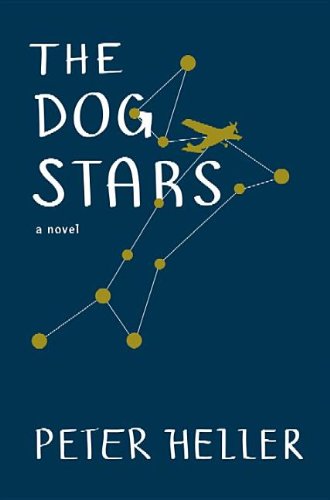
Meanwhile I finished listening to the audiobook of Peter Heller’s 2012 novel “The Dog Stars.” Of course it’s another apocalyptic novel — where is my mind this year — ready for end of the world?! Like Emily St. John Mandel’s novel “Station Eleven,” “The Dog Stars” is set quite a few years after a flu or virus has wiped out most of humanity. It’s two primary characters are a fortyish pilot and fisherman named Hig and an older, gun nut named Bangley who have settled at a country airstrip in Colorado, trying to fend off occasional attacks from violent survivors. Their families didn’t survive the pandemic, but Hig still relies on his very dear dog companion Jasper, a Blue Healer mix.
A lot of the time, Hig spends flying an old Cessna around, monitoring the area for intruders and visiting a hamlet of sick families a distance away who have the tainted blood. Then one day, he hears a distant response on his plane’s intercom and realizes good things might still be out there. He leaves their place behind, and sets out to investigate. What happens and whether he will return kept me glued to the audio all week while raking leaves, doing chores, and walking my dog.
I liked the characters of Hig and Bangley — a crotchety, but winning combo. And Jasper of course. Hig’s love for his dog in the story earned major points with me, being a dog lover. I was also impressed by the author’s vivid descriptions of life under such dire conditions. His writing was at times poetic and touching. Though I wasn’t sure about parts of a romance in the book, it seemed a bit goofy or just perhaps out of place, but I was willing to let it ride.
To compare, “The Dog Stars” is perhaps a tad scarier and more survival focused perhaps than “Station Eleven,” but not as scary or as dark as Cormac McCarthy’s “The Road.” The novel is a bit hopeful, which is nice when you’re facing extinction. I liked “Station Eleven” best, but also enjoyed “The Dog Stars” as it’s both suspenseful and well written. It has heart. Actor Mark Deakins read the novel for the audio, and is quite excellent.
As for brief impressions of three fall movies I’ve seen:
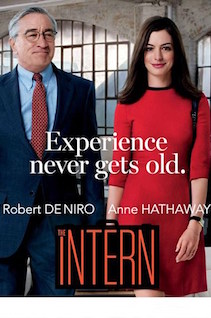
“The Intern” — I had to suspend my disbelief in a couple places in this Nancy Meyers’ movie, but I still ended up enjoying it. I credit actors Robert De Niro and Anne Hathaway for their performances and the cool shots of New York. I also had low expectations going in and so was pleasantly surprised it exceeded that. I found it a nice feel-good story but not over-the-top saccharine.
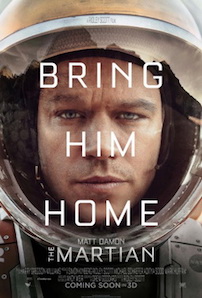
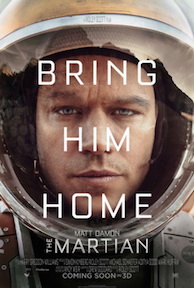
“The Martian” — Oh yeah I had been looking forward to Matt Damon as Mark Watney, and I was definitely entertained by this 3-D action space film adapted from Andy Weir’s bestselling book. I liked it but I guess I liked the book a tad better. The film had some great imagery, but for whatever reason it did not stay with me for long like substantial films usually do.
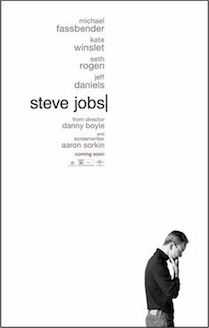
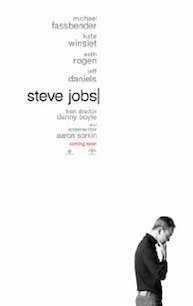
“Steve Jobs” — Whoa, does this film have a lot of dialogue in it or what. It’s filled to the brink, courtesy of Aaron Sorkin, and slightly reminiscent of “The West Wing.” It’s innovative and cuts to some of Steve Jobs’s inner character. I liked it but it also wore me out in parts — with the around and around cerebral dialogue. But Michael Fassbender seemed amazing as Jobs, and Kate Winslet and Seth Rogen were quite excellent too.
That’s it for now. How about you — have you read “The Dog Stars” or seen any of these movies, and if so, what did you think?