
Hi. I hope everyone is doing well and had a good week. The big news is that this Monday I’m going to: (a) travel (b) cross the border (c) fly (d) all of the above. Yikes, I’m headed into the storm that is the Covid spread. I wouldn’t do it if it wasn’t necessary, but I need and would like to check in with my parents who my siblings and I are rotating visits with. And so I’m flying direct to Los Angeles masked-up and with sanitizer and then will quarantine alone for the allotted time in one place … before eventually going on to stay with them in another.
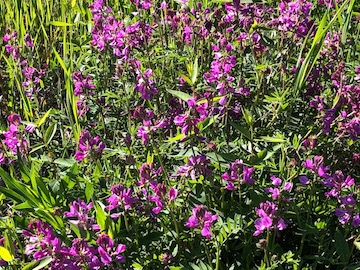
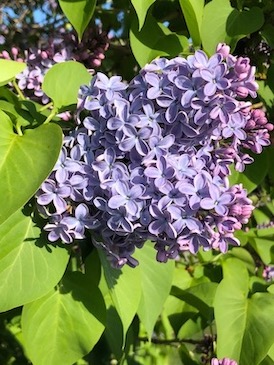
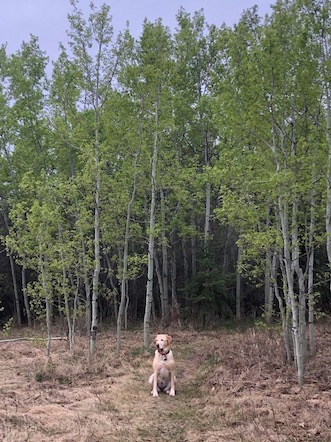
It’s complicated right? And the numbers in parts of the U.S. are not looking good. We’ve had a little spike here in western Canada the past week but nothing comparatively. If all goes well, I’ll be there a month and then return home to quarantine back in the North Country. See the Wild Prickly Rose pictured above … it’s the official provincial flower of Alberta.
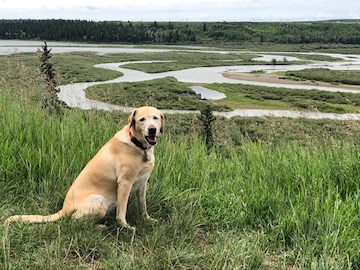
I feel committed to steering clear of Covid … as en route I’ll be masked and geared up and once I arrive I’ll go into quarantine, staying inside alone for the allotted time. So we will go from there. It’s just something people need to do now. Have you traveled lately and done this? I’m not exactly looking forward to the procedure … but it’ll be great to see family. Meanwhile I’ve been busy this past week getting ready. My mind has been a bit distracted to read much, but audiobooks continue to keep me company during dog walks, yard work, and chores. Where would we do without audios?
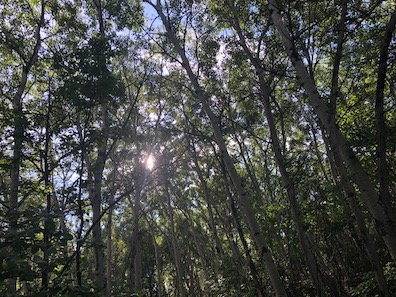
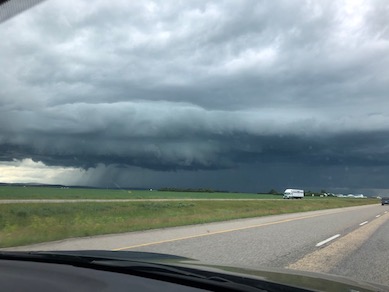
Meanwhile the thunderstorms lately have been quite strong here; luckily they happen mostly during the evening hours, when we run around closing windows quickly. Which reminds me … did anyone catch Mary Trump on the Rachel Maddow show last night? Her book sold nearly a million copies the first day … holy smokes. So does that bode well for the election or not? I guess I don’t need to read her book to know … what we face with this president … but I support her for putting it out there. And I remain hopeful for change in November.
In other book news, I see that the publishing industry is moving more to diversify its ranks with new top executives at Simon & Schuster, Pantheon, and elsewhere. The New York Times article “In Publishing Everything Is Up for Change,” which came out this week, describes a “rare moment of transformation that promises to influence the books put out into the world.” “Ten years from now, I don’t think anything will look the same,” said Reagan Arthur, who was named publisher at Knopf in January. According to a diversity survey, it’s an industry whose work force is more than 75 percent white … so what’s happening now definitely could be a welcomed watershed moment in publishing and what books get the spotlight. What do you think? And now I’ll leave you with a review of what I finished lately.
The Stars Are Fire by Anita Shreve / Knopf / 2017 / 256 pages
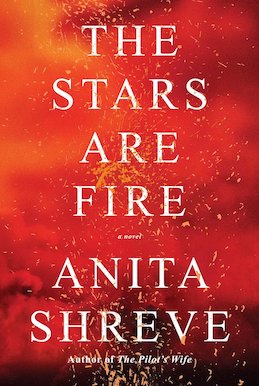
Why I Picked It Up: This was author Anita Shreve’s last novel as she passed away in 2018 from cancer. A blog I read had recommended it … and I was midway into the audiobook of it before realizing … it wasn’t in my typical reading zone. It’s a bit of a romantic kind of story, which is not a genre I usually pick up … but I finished it nonetheless.
Synopsis: Set in a coastal town in Maine in 1947, the novel is about a woman named Grace with two young children who’s caught in a loveless, uncommunicative marriage to Gene … when a colossal forest fire rips through towns along the coast and Grace with her children and neighbor Rosie (and her kids) must race into the sea to try to survive the flames. Grace’s husband who’s out at the time doesn’t come back and is listed as missing, while Grace in the aftermath moves with her children and mother into her deceased mother-in-law’s house, which was one of the few houses spared. Little by little, Grace gains some independence after the chaos of the fires, rebuilding her life: with work at a clinic and a brief fling with a tenant. All is boding well, until an event happens that changes her trajectory and takes away the little she’s gained since putting her life back together.
My Thoughts: The story is based on actual forest fires in 1947 that wiped through nine coastal towns of Maine, which according to the New England Historical Society: destroyed 851 homes and 397 seasonal cottages, leaving 2,500 people homeless and killing 16. I had no idea about this real life disaster, which the author builds the novel around … so I was interested to know about it and could picture what happened all too well. It reminded me of the fires in Northern California in 2018.
The story is a bit of a period piece delving into mothers’ lives back then (post-war), full of housework, parenting, and not much else once stuck in an unhappy, bad marriage. I thought the story was all right as light summer fare, even if there are a few plot turns that seem a bit implausible. As I said, it was more of a romantic-lite kind of tale than I was expecting, but its simplicity and drama worked enough during these pandemic times. It didn’t strain the brain … just moved along with its drama to its more hopeful end.
I also finished Elizabeth Strout’s 2019 novel “Olive, Again,” but I think I will wait till next time to review that. I just realized both Strout’s and Shreve’s novels are set in Maine. So I guess my mind was on Maine this past week. It’s a beautiful state, though I’ve only spent time there once long ago.
That’s all for now. What about you — what’s been on your mind, or happening in your world?