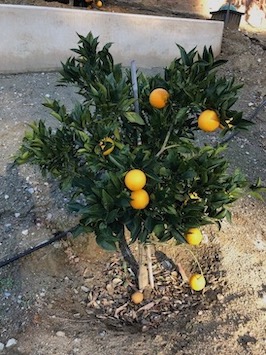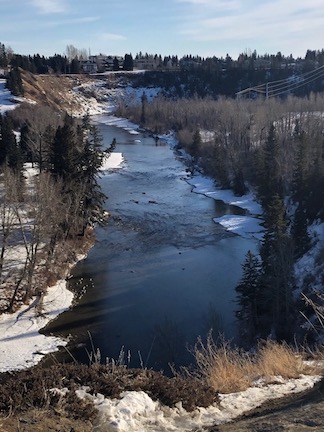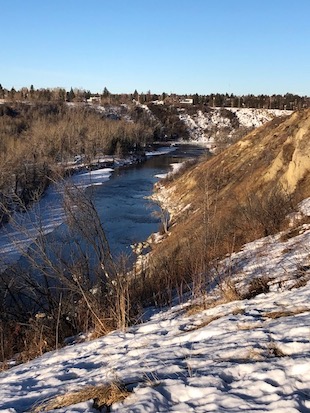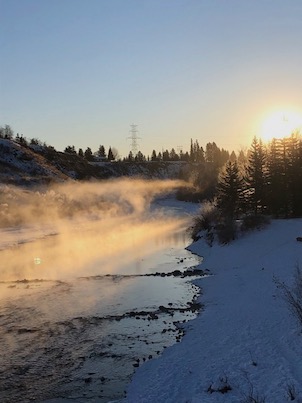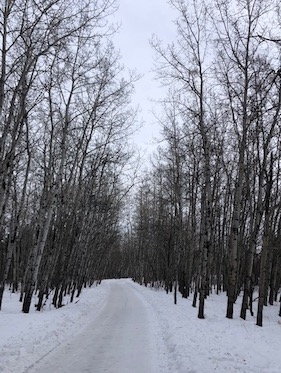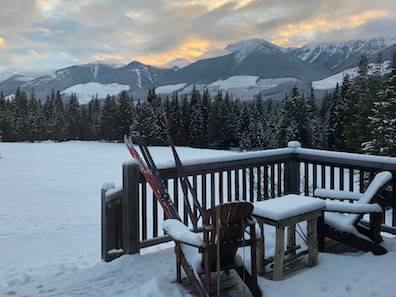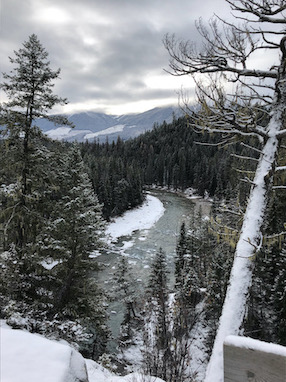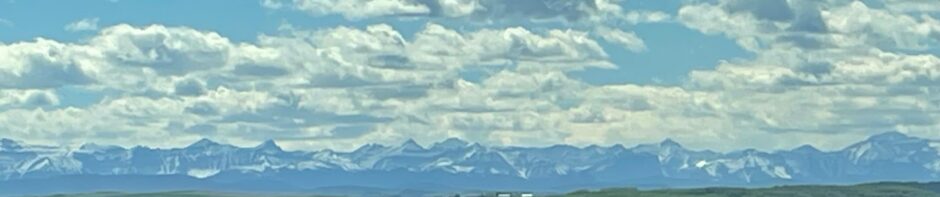

Greetings. I made it back to Canada in one piece. I had to go to a quarantine hotel near the airport for one night and then once they emailed me my negative Covid test results the next afternoon they said I could go home to quarantine, which I’m doing. It’s a total of 14 days without leaving the property. I’ve done this before — last summer — so I know how it goes. Canada is stricter on Covid rules than the U.S. and has less of a vaccine supply. But my quarantine will be over by next Friday so I’m halfway through it. Our dog Stella is demonstrating how I feel about this now, ha. I know several of you have already had your vaccine shots, which is fantastic. It seems we might soon see the light at the end of the tunnel.
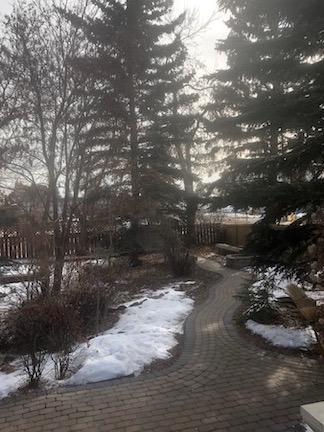
It was about a year ago now — on March 11 — that the World Health Organization declared Covid-19 to be a pandemic. We had come back to Canada from a road trip meeting up with my sister and brother-in-law to ski in Sun Valley, Idaho, at the end of February 2020, and by March 17, I had played my last tennis doubles game as they shut everything down, including the U.S.-Canadian border to non-essential travel.
It all happened quickly. The world turned virtual at workplaces, schools, and gyms, and we experienced masks, home deliveries, and curbside pickups. It’s all too ingrained in our brains by now. Do you remember where you were when it first started? Somberly we reflect that to this date, Canada has had 22,397 Covid deaths, the U.S. has had 530,000, and the world 2.63 million. It’s mind-boggling and sad and hard to register. In the years to come we will need to draw on all the lessons from this, so we can better fight the next pandemic in the future. And now I will leave you with a couple reviews of what I finished lately.
The Henna Artist by Alka Joshi / MIRA Books / 368 pages / 2020
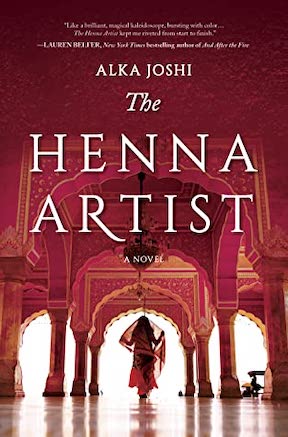
I listened to this novel as an audiobook (the paperback is coming out April 6, 2021) and I was drawn in from the start. As a debut novel, it surprised me in its vibrant and sweeping storytelling of 1950s Jaipur India … and the character of Lakshmi, who is a 30-year-old henna artist to wealthy women in her community, along with her trusty assistant, a young winsome boy named Malik. (Admittedly I had to look up henna, which is a dye from the henna tree that can be put on the skin of people temporarily like a tattoo design to various body parts.) Lakshmi also uses herbal remedies on her clients in order to avoid pregnancies and the like … and you soon come to understand that more than a decade ago Lakshmi ran away from her hometown and her abusive arranged marriage, leaving her household in scandal, to re-establish herself in another town, working very hard to gradually gain some success.
Things begin to change when Lakshmi’s estranged husband and her 13-year-old sister, the struggling Radha, who she never knew she had, arrive at her door. The two sisters are quite different — one hard working and careful and the other ill-mannered and rash — and both are flawed but also resilient. Lakshmi helps her sister with a place to live and to get a good education, but after awhile through a predicament they come to seemingly lose much of what Lakshmi had gained, and must once again untangle themselves from scandal and society’s mores.
This novel takes a look at women and marriage in 1950s India from various angles and castes in India’s culture … and also among whites. Some characters are in arranged marriages, others are having affairs, some have kids, some don’t … some poor, some wealthy. I got caught up in Lakshmi’s world and I was rooting for her. I liked her more than Radha, who seemed a bit like a little uncooperative vixen, despite not exactly meaning to be.
The storytelling is well done and I’m looking forward to the sequel coming out June 22 by Alka Joshi called “The Secret Keeper of Jaipur.” The author had written “The Henna Artist” over 10 years as a tribute to her mother, who she imagines in the book what her life would have been like if she had not been put into an arranged marriage and if could’ve lived the life she really wanted to live. Her hopes and dreams are manifested in Lakshmi, which is cool to think about. Check it out if you like cultural women’s sagas. Reese Witherspoon picked this one for her book club pick in May 2020, and I was pleasantly surprised by it. Apparently a TV series of the novel is in development with actress Freida Pinto set to star as Lakshmi.
To the Bright Edge of the World by Eowyn Ivey / Little, Brown /432 pgs / 2016
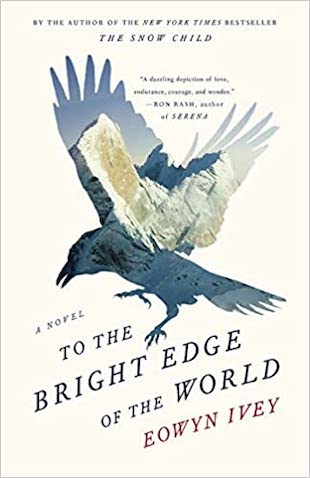
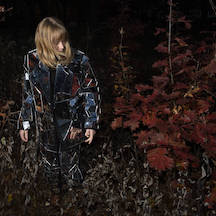
I liked this author’s first novel “The Snow Child” so much that I thought I’d check out her second novel, which is quite different but also takes place partly in Alaska. It’s mainly about an Army Officer (Colonel Allen Forrester) who takes an expedition in 1885 into Alaska Territory to chart the Wolverine River and his correspondence with his wife Sophie who stays behind at their base at the Vancouver Barracks in Washington Territory. There is also a secondary correspondence 100 years later between a great relative of the Colonel’s and a museum curator who’s documenting the expedition’s artifacts and is planning an exhibit.
The story is told through letters, journal entries, articles, and documents, which helps to liven it up, though the stories of the Colonel’s and Sophie’s were good enough to keep me going. The Colonel’s expedition has some interesting characters, notably: a burly, lively guy named Tillman, an industrious Native American woman who’s awesome, a studious naturalist (Pruitt), the interpreter Samuelson, and a starving guy they meet up with named Boyd. I liked the Colonel’s entries best of their arduous journey and what they come to find and how they struggle against the elements and with starvation, though others in my book club liked Sophie’s entries better of her struggles as a pregnant wife and her independent nature and later her pursuit of early nature photography in 1885.
Theirs — Sophie & the Colonel’s — is a love affair so the novel is part love story, part adventure novel and historical fiction (very loosely based on Henry T. Allen’s real life Alaskan expedition in 1885). It’s a long novel and just a few bits got a bit tedious, but what I liked is how the animal and human worlds begin to blur along the way … and how the author captures that by adding little surreal parts to the Colonel’s story, notably: a baby found amid tree roots, a lake creature, and spirits up on the mountain pass. There’s also an Old Native man who’s raven-like and a bit of a trickster who follows their journey. So there’s a bit of mysticism and magic to the story that keeps some spark and uncertainty to it.
The novel’s also vivid and conjures up much nature and untamed wilderness that captures one’s imagination. So overall, there’s a lot to it (is it too much?) — I’m not sure I needed the second correspondence that takes place 100 years later, but others in my book club said they really liked that part. It does lend some historical perspective to the expedition and what it did to the indigenous population and what came afterwards. So that seems valid. I just mostly wanted to get back to the Colonel’s and Sophie’s stories. I needed one scene of them at the end, which doesn’t really come (a slight letdown), but it casts their future well enough.
That’s all for now. What about you — have you read either of these books or authors, and if so what did you think?